

What Is Nasolabial Fold Filler?
Nasolabial fold filler is an injectable treatment that places a soft-tissue filler beneath or around the smile lines to restore support and make the folds appear less pronounced. Hyaluronic acid fillers are commonly selected because they can provide immediate correction, are gradually biodegradable and can usually be dissolved with hyaluronidase when clinically necessary.
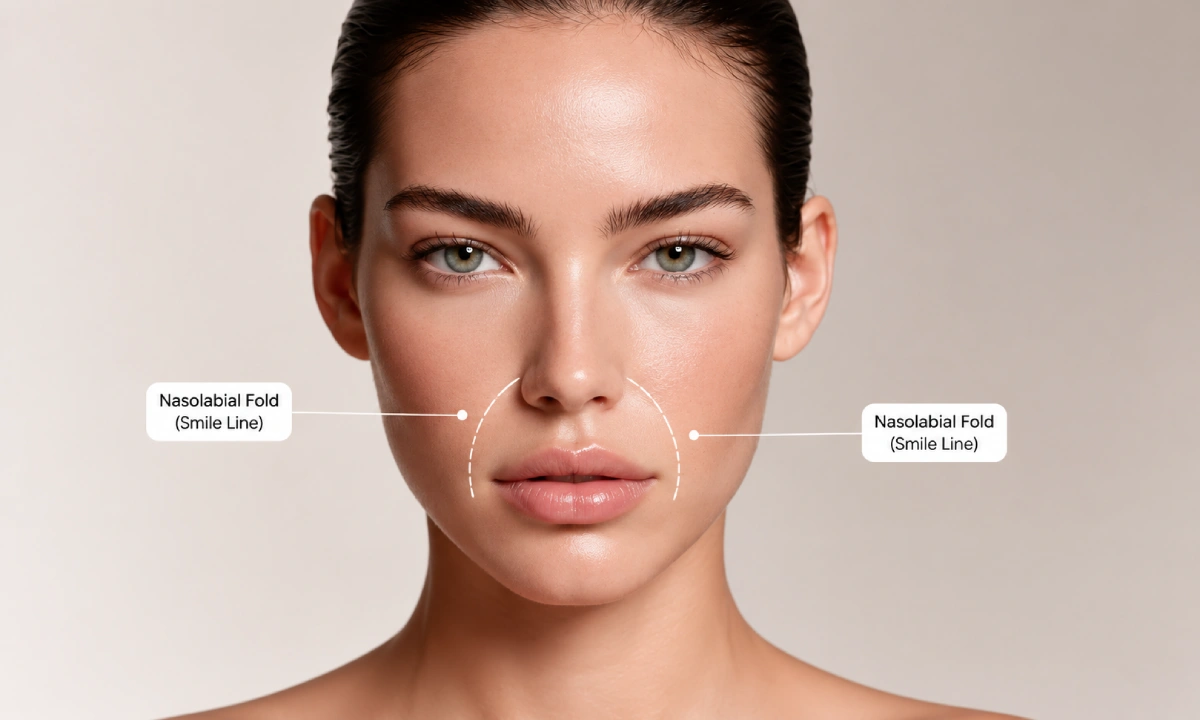
The nasolabial folds run from each side of the nose towards the corners of the mouth. They become more noticeable when the cheek descends, facial volume decreases or the skin loses firmness. Dermal fillers are commonly used to treat moderate to severe facial folds, including nasolabial folds.
The procedure may involve:
- Directly filling the deepest part of the crease
- Supporting the base of the nose
- Restoring volume in the medial cheek
- Treating several connected areas using a conservative full-face approach
- Combining filler with skin-quality or collagen-supporting treatments
Nasolabial filler should not make the lower face look heavy or swollen. Overcorrection can flatten normal facial contours, reduce expression and create an unnatural shelf beside the nose or mouth.
The best outcomes usually come from treating the anatomical cause of the fold rather than simply following the visible line with a needle.

What Causes Nasolabial Folds?
Nasolabial folds are created by normal facial anatomy and movement. They are not automatically a sign of premature ageing, and almost everyone develops some degree of folding when smiling.
They become deeper due to a combination of:
- Facial bone remodelling
- Changes in cheek fat compartments
- Loss of collagen and elastin
- Repeated facial movement
- Skin thinning
- Sun exposure
- Genetics
- Smoking
- Significant weight change
- Reduced structural support around the midface
The dominant cause differs between patients. One person may have strong smile lines because of naturally expressive facial movement, while another may develop them mainly because the cheeks have lost support.
Age-Related Volume Loss
Facial ageing affects more than the surface of the skin. Bone, deep fat pads, superficial fat, retaining ligaments and skin quality all change over time.
As volume decreases in the central and upper cheek, the soft tissues may shift downward and inward. This increases the contrast between the cheek and the upper lip, making the nasolabial fold appear deeper.
Directly injecting the fold may improve the crease, but it may not correct the underlying loss of cheek support. In these cases, carefully placed cheek filler can indirectly soften the smile lines while maintaining more natural facial proportions.
Age-related volume loss does not occur at the same rate in everyone. Genetics, ultraviolet exposure, smoking, stress, weight fluctuations and hormonal changes can affect how quickly the midface changes.
Facial Expressions and Muscle Movement
Smiling, laughing and speaking naturally move the muscles around the mouth and cheeks. These movements temporarily deepen the nasolabial folds.
Over many years, repeated movement can contribute to more visible creasing, particularly when the skin has become thinner or less elastic. However, facial movement is only one part of the problem.
Nasolabial folds are not usually treated with Botox because they are not caused by one overactive muscle that can be safely relaxed without affecting the smile. Weakening the muscles responsible for smiling could interfere with expression, speech or oral function.
Some patients notice that the folds are minimal at rest but become prominent when smiling. In this situation, filler must be used conservatively because the moving face will always produce a natural crease.
Skin Elasticity and Collagen Loss
Collagen gives the skin strength, while elastin allows it to stretch and return to its original position. The production and organisation of these proteins change with age.
In Dubai, frequent sun exposure can accelerate collagen breakdown when the skin is not adequately protected. Chronic ultraviolet exposure may contribute to uneven pigmentation, fine lines, thinning and reduced elasticity.
Dry indoor environments, including prolonged air-conditioning, can also make the skin look temporarily more creased, although dehydration alone is not usually the main structural cause of a deep nasolabial fold.
Patients with mild folds and poor skin quality may benefit from a combination of conservative filler and treatments that target hydration, texture or collagen. Filler alone cannot correct pigmentation, enlarged pores or extensive sun damage.
Who Is a Good Candidate for Smile Line Filler?
A suitable candidate is generally an adult with visible nasolabial folds who wants a temporary, non-surgical improvement and understands that normal facial creases should not always be erased completely.
Good candidates usually have:
- Realistic expectations
- Mild, moderate or selected deep smile lines
- Stable general health
- No active infection in the treatment area
- No known allergy to the selected product
- A willingness to follow aftercare instructions
- An understanding of the possible complications
- Facial anatomy that can be improved safely with filler
Treatment may need to be postponed or avoided during pregnancy, breastfeeding, active skin infection, uncontrolled illness or an active dental infection near the treatment area.
Patients with a history of autoimmune disease, severe allergies, recurrent cold sores, bleeding disorders or previous filler complications require individual medical assessment.
Cosmetic filler is generally not appropriate for patients under 18 unless there is a legitimate medical or reconstructive indication. Younger adults should not be treated simply because normal smile lines appear during facial expression.
Mild to Moderate Smile Lines
Mild to moderate nasolabial folds often respond well to conservative treatment. These patients may require a small amount of soft hyaluronic acid filler placed directly into the fold, around the nasal base or in the nearby cheek.
The objective is usually to reduce the depth of the crease without changing the shape of the smile.
Patients with early folds may also benefit from preventive strategies such as:
- Daily broad-spectrum sunscreen
- Avoiding smoking
- Maintaining stable body weight
- Supporting skin hydration
- Treating collagen loss where appropriate
- Avoiding unnecessary repeated filler
A mild fold does not necessarily need treatment. The decision should be based on how the feature affects the patient, not on social-media filters or pressure to achieve a completely line-free face.
Deep Nasolabial Folds
Deep folds require more detailed assessment. Injecting a large volume directly into a deep crease can produce heaviness without addressing the cause.
The physician may need to evaluate:
- Medial cheek volume
- Lateral cheek support
- Maxillary or midface projection
- The base of the nose
- Skin thickness
- Lower-face heaviness
- Previous filler placement
- Dynamic movement during smiling
- Asymmetry between the two sides
A layered plan may be more appropriate. This can involve cheek support first, followed by a smaller amount of direct nasolabial filler.
Very deep folds associated with significant skin laxity may improve only partially with injectables. Energy-based tightening, thread lifting or surgery may be discussed depending on the degree of tissue descent and the patient’s goals.
Patients Seeking Non-Surgical Facial Rejuvenation
Smile line filler may suit patients who want visible improvement without surgery, general anaesthesia or a prolonged recovery period.
Most patients can return to routine activities soon after treatment. However, temporary swelling, redness or bruising can still occur, so the procedure should not be scheduled immediately before a major event.
Non-surgical does not mean risk-free. Dermal filler remains a medical procedure involving facial blood vessels, nerves and soft tissues. Product selection and injection technique should therefore be based on anatomy rather than trends.
How Does Smile Line Filler Work?
Smile line filler works by adding controlled support beneath the skin or deeper facial tissues. The filler reduces the depth of the crease, improves the transition between the cheek and upper lip and decreases the shadow created by the fold.
Hyaluronic acid attracts and retains water, but its main effect as a dermal filler comes from its gel structure and the physical support it provides.
Depending on the patient, filler may be placed:
- Deep near the bone to support the upper nasolabial region
- Beneath the skin to soften a visible crease
- In the cheek to restore lost midface support
- At the base of the nose when structural deficiency contributes to the fold
- In several areas as part of a full-face balancing plan
The result is usually visible immediately, although swelling can temporarily exaggerate the amount of correction. The final result is better judged after the tissues have settled.
Filler cannot stop facial movement or prevent the fold from appearing when the patient smiles. An appropriate outcome should still move naturally.
How Is Nasolabial Fold Filler Performed?
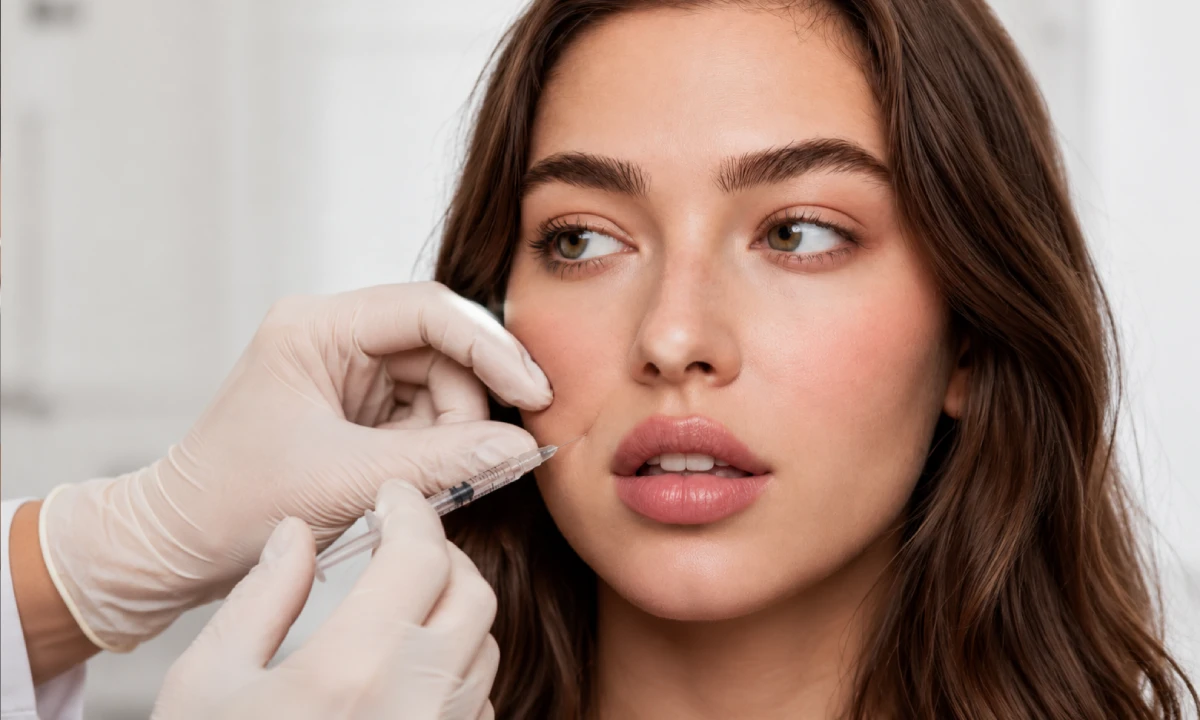
Nasolabial fold filler is performed in a clinical setting after medical consultation and facial assessment. The treatment commonly takes approximately 20–45 minutes, depending on the number of areas being treated.
The main stages are:
- Medical history and suitability assessment
- Facial examination at rest and during expression
- Selection of filler and treatment plan
- Skin cleansing and antiseptic preparation
- Optional application of numbing cream
- Injection using a needle, cannula or both
- Immediate review for symmetry and circulation
- Aftercare guidance
Patients should tell the physician about previous fillers, allergies, prescribed medication, supplements, dental treatment and any history of cold sores.
Blood-thinning medication should never be stopped without the approval of the prescribing doctor.
Consultation and Facial Assessment
A proper consultation should evaluate the whole face rather than examining only the crease.
The physician may assess:
- Whether the fold is visible at rest or only during smiling
- Cheek projection and volume
- Facial asymmetry
- Skin thickness and elasticity
- Lower-face heaviness
- Previous filler
- Dental or skeletal support
- The position of the corners of the mouth
- The patient’s preferred degree of correction
Photographs may be taken before treatment to document the baseline appearance.
The consultation should also clarify what filler can and cannot achieve. Patients seeking completely flat smile lines may need to adjust expectations because some degree of folding is necessary for natural expression.
Injection Technique
A needle, cannula or combination technique may be used.
A needle can allow precise placement of small amounts of filler. A blunt-tipped cannula may reduce the number of entry points and can be useful for broader tissue distribution. Neither instrument eliminates the risk of bruising or vascular complications.
The filler may be injected using:
- Small linear threads
- Micro-aliquots
- Deep structural deposits
- Layered techniques
- Indirect cheek support
- Direct correction of the fold
The correct technique depends on the product, depth of the crease, tissue thickness and vascular anatomy.
The area around the side of the nose contains important blood vessels. A qualified injector should understand the regional anatomy, recognise early warning signs of vascular compromise and have an emergency protocol available.
Treatment Duration
The injection itself may take 10–20 minutes, while the full appointment commonly lasts 30–45 minutes.
A longer session may be required when:
- The cheeks are also being treated
- Previous filler needs assessment
- Significant asymmetry is present
- Several facial areas are included
- Additional numbing time is required
- Ultrasound assessment is clinically indicated
The treatment should not be rushed. A shorter appointment is not a meaningful sign of greater expertise.
Which Dermal Fillers Are Used for Smile Lines?
Hyaluronic acid fillers are the most commonly used products for nasolabial folds. They are available in different firmness levels, particle structures and degrees of cross-linking.
A suitable smile line filler should generally integrate smoothly with the tissue while providing enough support to resist repeated facial movement.
Possible filler categories include:
| Filler type | Typical characteristics | Important consideration |
| Hyaluronic acid | Temporary, versatile and usually reversible with hyaluronidase | Commonly preferred for first-time patients |
| Calcium hydroxylapatite | Provides support and may stimulate collagen | Not directly dissolved with hyaluronidase |
| Poly-L-lactic acid | Gradually stimulates collagen rather than providing only immediate filling | Requires multiple sessions and is not usually injected directly into every crease |
| Polymethylmethacrylate | Long-lasting or semi-permanent correction | Difficult to reverse and requires careful candidate selection |
| Autologous fat | Uses the patient’s own fat | Requires a surgical harvesting procedure and results are less predictable |
Temporary absorbable fillers are widely used for moderate to severe wrinkles and folds, including nasolabial folds. Some longer-lasting materials may also be used, but their reversibility and risk profile differ.
For many patients, a hyaluronic acid filler is selected because the treatment can be adjusted gradually. The exact brand is less important than using an authentic, appropriately stored product chosen for the correct tissue layer.
Patients should be able to see the sealed box, expiry date and batch details before injection.
Benefits of Nasolabial Fold Filler
Potential benefits include:
- Immediate softening of smile lines
- A smoother cheek-to-mouth transition
- Reduced shadowing around the lower midface
- Improved facial balance
- Customisable correction
- Minimal interruption to daily activities
- Temporary results that can be reassessed over time
- The possibility of dissolving most hyaluronic acid fillers if medically necessary
- Compatibility with other facial rejuvenation treatments
The most valuable benefit is not necessarily the greatest possible correction. A subtle improvement that preserves expression often looks more natural than completely filling the fold.
Smile line filler may also improve asymmetry, although perfect symmetry should not be promised. Every face has structural and movement-related differences between the two sides.
The procedure does not improve every feature associated with facial ageing. It will not directly remove pigmentation, tighten severely loose skin or eliminate dynamic wrinkles caused by muscle activity.
Smile Line Filler Before and After
Before treatment, nasolabial folds may appear as lines, grooves or shadows extending from the nose towards the mouth. They may be more visible under overhead lighting or when the patient smiles.
After treatment, patients may notice:
- A softer crease
- Reduced shadowing
- A smoother transition between the cheek and upper lip
- Better balance between the two sides
- Less tired or heavy-looking lower midface
Improvement is usually visible immediately, but early swelling can make the result appear fuller than expected. Minor asymmetry may also be temporarily exaggerated by uneven swelling.
The settled result is commonly assessed after approximately two weeks.
Before-and-after images should be viewed critically. Lighting, head position, facial expression, makeup and camera distance must be similar for a fair comparison.
A genuine natural result should look appropriate both at rest and during smiling. The mouth should not appear restricted, heavy or unusually projected.
Smile Line Filler Recovery and Aftercare
Recovery is usually brief, but visible side effects can occur. Most patients return to routine activities on the same day or the following day.
Minor swelling, tenderness, redness and bruising are common. Immediate improvement may be seen, although the final result should not be judged until the initial inflammation has settled.
Recovery Timeline
| Time after treatment | What may be expected |
| First few hours | Redness, tenderness, mild swelling or small injection marks |
| Days 1–3 | Swelling may be most noticeable; bruising can develop |
| Days 3–7 | Most mild reactions begin to improve |
| Around 2 weeks | Filler is more settled and the result can be reviewed |
| Several weeks | Minor firmness or tissue sensitivity should continue to improve |
Some bruises can last longer than one week. Recovery varies with injection technique, the amount used, medication, individual healing and the number of treated areas.
Patients should seek medical advice if symptoms are worsening rather than improving.
Aftercare Instructions
After treatment:
- Avoid rubbing, pressing or massaging the area unless instructed
- Avoid intense exercise for approximately 24–48 hours
- Avoid saunas, steam rooms and excessive heat
- Avoid alcohol if it worsens swelling or bruising
- Do not apply makeup over fresh injection points until advised
- Use gentle skincare
- Avoid strong retinoids, acids and exfoliation for several days
- Avoid dental procedures for the period recommended by the treating physician
- Sleep with the head slightly elevated if swelling is noticeable
- Use broad-spectrum sunscreen
- Contact the clinic if pain, colour change or unusual swelling occurs
Ice may be used carefully for short periods if recommended. It should not be pressed firmly against the injected area.
Dubai’s heat can increase flushing and swelling after treatment. Direct sun exposure, outdoor exercise and prolonged time in high temperatures should be limited during the early recovery period.
How Long Does Nasolabial Fold Filler Last?
Nasolabial fold filler commonly lasts approximately 6–18 months, depending on the product, injection depth, amount used, facial movement and individual metabolism.
The result may last for a shorter or longer period depending on:
- Type and firmness of filler
- Depth of placement
- Severity of the original fold
- Whether cheek support was also treated
- Amount of facial movement
- Age and skin quality
- Smoking
- Sun exposure
- Metabolic rate
- Weight change
- Previous treatments
Filler in highly mobile areas may break down faster than filler placed in deeper structural areas.
The treatment does not disappear suddenly. The correction generally reduces gradually as the material is metabolised.
Maintenance should be based on clinical reassessment rather than a fixed calendar. Treating too frequently can lead to product accumulation, heaviness or an overfilled appearance.
Patients may not require the same amount at every appointment. Residual filler and changes in surrounding tissue should be evaluated before additional product is injected.

Risks and Side Effects of Smile Line Filler
Most filler reactions are temporary, but serious complications can occur. Patients should understand both the common and rare risks before consenting to treatment.
The nasolabial region contains important branches of the facial blood supply. Inadvertent injection into or compression of a blood vessel can reduce circulation to the skin and, in exceptionally rare cases, affect vision.
Common adverse effects reported after hyaluronic acid filler include swelling, redness, pain, itching and bruising. More serious vascular complications can cause tissue injury, skin necrosis or visual loss.
Common Side Effects
Common temporary effects include:
- Redness
- Swelling
- Tenderness
- Bruising
- Mild itching
- Firmness
- Small lumps
- Temporary asymmetry
- Sensitivity when smiling or touching the area
These effects usually settle within several days, although bruising or swelling can sometimes last longer.
Small palpable areas do not always indicate a complication. However, persistent, painful, visible or worsening lumps should be assessed rather than aggressively massaged at home.
Delayed swelling may occur weeks or months after treatment, particularly following infection, illness, dental procedures or immune stimulation. The cause should be evaluated before any additional filler is placed.
Rare Complications
Rare complications include:
- Infection
- Biofilm-related inflammation
- Persistent nodules
- Delayed hypersensitivity
- Filler migration
- Granuloma formation
- Vascular occlusion
- Skin ulceration or necrosis
- Nerve irritation
- Visual disturbance
- Stroke-like complications in exceptionally rare circumstances
Urgent warning signs include:
- Severe or increasing pain
- Blanching or unusually pale skin
- Dusky, grey or purple discolouration
- A net-like mottled pattern
- Cold skin
- Blisters
- Sudden visual change
- Severe headache
- Weakness or neurological symptoms
These symptoms require immediate medical assessment. Patients should not wait until the next day to see whether they improve.
The physician should have hyaluronidase available when using hyaluronic acid filler and should be trained to recognise and manage vascular events.
Smile Line Filler vs Botox
Smile line filler and Botox work in different ways.
| Feature | Smile line filler | Botox |
| Main action | Restores support and reduces crease depth | Temporarily reduces muscle activity |
| Best for | Static folds, volume loss and structural shadowing | Dynamic wrinkles caused by muscle contraction |
| Typical smile-line use | Common | Limited and generally not a direct treatment |
| Result onset | Usually immediate | Develops over several days |
| Facial volume | Adds support | Does not add volume |
| Typical duration | Approximately 6–18 months | Commonly 3–4 months, with variation |
Botox is not generally the first choice for nasolabial folds. The muscles in this area are involved in smiling and moving the upper lip. Weakening them inappropriately can affect facial expression.
Botox may sometimes be used in nearby areas for different concerns, such as a gummy smile or downturned mouth corners, but these treatments do not replace filler for structural smile lines.
Patients who have both dynamic upper-face wrinkles and nasolabial folds may benefit from a combination plan using Botox and filler in separate anatomical areas.
Nasolabial Fold vs Cheek Filler
Smile line filler directly softens the crease, while cheek filler restores midface support that may indirectly reduce the fold.
In many patients, combining conservative cheek support with a small amount of direct fold treatment gives a more balanced result than injecting the entire volume into the nasolabial crease.
However, cheek filler is not automatically required. A younger patient with adequate cheek volume and a localised crease may benefit from direct treatment alone.
The physician should assess the face from the front, side and three-quarter view before deciding where support is needed.

Can Smile Line Filler Be Combined with Other Treatments?
Yes. Nasolabial fold filler can be combined with other injectables and skin treatments when each procedure addresses a separate concern.
Combination treatment should be planned strategically rather than performing multiple procedures only to create a larger package. Treating too many areas without clear indications can produce facial heaviness and make it difficult to assess which treatment caused a problem.
Cheek Filler
Cheek filler may restore midface support and reduce the downward pressure that contributes to nasolabial folds.
It is commonly considered when the patient has:
- Flattened cheeks
- Midface hollowing
- Loss of projection
- Downward tissue shift
- Deep folds that are not caused only by the crease itself
Cheek treatment should remain proportionate to the face. Excessive lateral or anterior cheek filler can distort facial balance.
Marionette Line Filler
Marionette lines extend downwards from the corners of the mouth towards the chin. They are separate from nasolabial folds, although both can contribute to a tired or downturned lower-face appearance.
A patient may need both areas treated when volume loss affects the tissues above and below the mouth.
Marionette treatment requires careful assessment of the chin, jawline, corners of the mouth and pre-jowl area. Simply filling every visible line may make the lower face look wider or heavier.
Full Face Filler
Full-face filler evaluates how different facial regions interact. The plan may include the cheeks, temples, chin, jawline, lips or lower face, but not every patient needs every area treated.
For nasolabial folds, full-face assessment can reveal whether the main issue is:
- Cheek volume loss
- Weak chin projection
- Midface flattening
- Lower-face heaviness
- Generalised facial deflation
- Structural asymmetry
A conservative full-face approach often uses less filler in each area to create balanced support.
Skin Boosters
Skin boosters improve hydration, texture and superficial skin quality. They do not usually provide enough structural support to correct a deep nasolabial fold.
They may be combined with filler when the patient has both:
- Structural creasing
- Dryness
- Fine lines
- Crepey texture
- Reduced skin elasticity
- Dullness
Depending on the treatment, filler and skin boosters may be performed during the same appointment or separated. The timing should consider product compatibility, inflammation and the anatomical areas involved.
Smile Line Filler Cost in Dubai
The cost of smile line filler in Dubai commonly depends on the product, number of syringes, complexity of the anatomy and experience of the treating physician.
Published Dubai prices vary significantly. Current clinic listings commonly place hyaluronic acid filler at approximately AED 999–AED 2,500 per syringe or treatment, although premium products, multiple syringes or combined cheek treatment may cost more.
Factors affecting cost include:
- Filler brand and formulation
- Number of millilitres required
- Direct fold treatment versus cheek support
- Physician’s experience
- Clinic standards and location
- Whether follow-up is included
- Treatment of one or several facial areas
- Use of advanced imaging when indicated
A mild fold may require less than a deep bilateral correction. Some patients need one syringe, while others may require staged treatment across the cheeks and nasolabial region.
The cheapest option is not necessarily the safest or most cost-effective. Patients should confirm:
- Who will perform the injection
- Whether the practitioner is licensed in Dubai
- Which product will be used
- Whether the product is authentic and sealed
- Whether the clinic can manage complications
- Whether the quoted price is per syringe or for the full plan
An exact price should be provided only after facial assessment because two patients with similar-looking lines may require very different treatment strategies.
Why Choose Dr. Ali for Nasolabial Fold Filler in Dubai?
Smile line treatment should begin with diagnosis, not with choosing a fixed number of syringes. Dr. Ali’s approach focuses on assessing the cause of the fold, the condition of the cheeks and the way the face moves before deciding where filler should be placed.
A natural treatment plan may involve direct nasolabial correction, cheek support or a combination of both. The objective is to soften excessive depth without removing normal expression or making the area around the mouth look heavy.
During consultation, patients should expect discussion of:
- Facial structure and asymmetry
- The depth of the folds at rest and during smiling
- Previous filler treatments
- Suitable product consistency
- Realistic improvement
- Possible side effects and rare complications
- Recovery and maintenance
- Whether filler is the correct treatment at all
Dr. Ali may also advise against direct smile line filler when the fold is mainly caused by significant cheek descent, severe skin laxity or another structural concern. In these situations, an alternative or combined approach may be more appropriate.
The product should be selected according to the patient’s anatomy rather than based only on brand popularity. A conservative starting volume also makes it easier to preserve facial character and reassess the result after swelling has settled.