
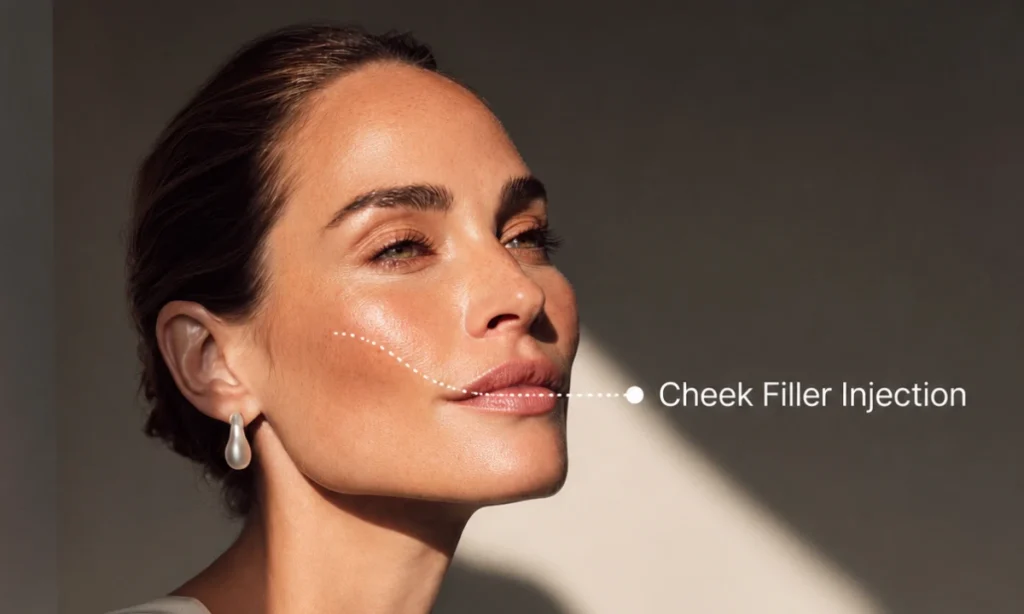
What Is Cheek Gel Injection?
Cheek gel injection — commonly called cheek filler — is a non-surgical procedure in which a gel-based dermal filler, usually made of hyaluronic acid, is injected into specific points across the midface to restore or enhance volume. Hyaluronic acid is a substance the body produces naturally, which is part of why these fillers integrate so smoothly and carry a strong safety profile.
The goal isn’t simply to “add volume.” A well-planned cheek treatment restructures the midface: it lifts areas that have descended, sharpens definition along the cheekbone, and rebalances proportions so the face looks harmonious from every angle. Depending on the product and technique, results are visible immediately and continue to settle over the following two weeks.
What Are the Steps of Cheek Filler Injection?
The procedure is quick — typically 20 to 40 minutes — but the care taken at each stage is what separates a natural result from an obvious one.
- Consultation and facial assessment. The physician studies your facial anatomy, bone structure, and the way volume has changed over time, then maps a treatment plan to your goals.
- Cleansing and numbing. The skin is thoroughly cleaned, and a topical anesthetic cream (and often filler containing lidocaine) keeps discomfort minimal.
- Marking the injection points. Specific anatomical points are marked to guide precise, symmetrical placement.
- Injection. Using a fine needle or a blunt cannula, the filler is delivered into the planned depths — some on the bone, some in the soft tissue.
- Molding and review. The physician gently shapes the product and checks symmetry from multiple angles, sometimes asking you to sit up to assess the result naturally.
- Aftercare guidance. You leave with clear instructions for the first 24 to 48 hours.
Best Doctor for Cheek Filler Injection (in Dubai)
Choosing the right injector matters more than choosing the filler. Cheek work sits over delicate vascular structures, so anatomical knowledge, an artistic eye, and genuine clinical experience are non-negotiable.
In Dubai, Dr. Ali offers cheek filler treatments grounded in this kind of expertise. A qualified practitioner will always begin with a full assessment, explain which filler suits your face and why, and set realistic expectations rather than promising a dramatic transformation. That honesty, alongside proper credentials and a sterile clinical setting, is the foundation of a safe result.
Know the Cheek Filler Injection Points
Modern cheek augmentation often follows a structured mapping system that divides the cheek into defined zones. Each point serves a distinct purpose, and combining them is what creates a lifted, balanced midface rather than a single puffy spot.
Apex of the Cheek (CK4–CK1)
These points sit at the highest, most projecting part of the cheek. Filler placed here restores the “apple” of the cheek and creates the light-catching highlight associated with a youthful face. This is often the anchor of the entire treatment.
On the Cheekbone (CK2)
Placement directly over the zygomatic bone adds definition and structure along the upper cheek, sharpening the contour and supporting the tissue above it.
Mid-Cheek (CK3)
The central zone addresses flatness in the middle of the face. Subtle support here smooths the transition between the upper cheek and the area beneath the eyes.
Below the Cheekbone (CK5)
Volume placed beneath the bone helps recreate a soft shadow and contour, lending the face a slightly more sculpted, defined appearance — particularly useful for those wanting a contoured look.
Types of Cheek Gel and Cheek Filler — Which Are They?
Not all cheek fillers behave the same way. Some are pure hyaluronic acid; others are collagen stimulators that work gradually. The right choice depends on your skin, your goals, and how long you want results to last. Here’s a comparison of three commonly used options.
|
Filler |
Type & Main Material | How It Works | Best Suited For |
Approx. Longevity |
| Ellanse | Collagen stimulator (PCL – polycaprolactone) | Adds immediate volume and stimulates the body’s own collagen over time | Those wanting longer-lasting, gradual structural support |
Up to 1–2+ years |
|
Perfectha |
Hyaluronic acid | Provides instant, smooth volume that integrates naturally | Natural-looking lift with the reassurance of reversibility | Around 12–18 months |
| Revofil | Hyaluronic acid (often with added support technology) | Delivers volume and contour with good lifting capacity | Defined cheekbone structure and midface projection |
Around 12–18 months |
- Ellanse Cheek Filler: Ellanse is a collagen-stimulating filler rather than a pure hyaluronic acid gel. It provides volume right away while encouraging your body to produce its own collagen, which is why its results tend to last longer and develop a more structural quality. Because it isn’t dissolvable in the same way HA fillers are, it’s best placed by an experienced injector.
- Perfectha Cheek Filler: Perfectha is a hyaluronic acid filler valued for its smooth, natural integration. It’s a reliable choice for those who want noticeable but understated enhancement, with the added comfort that HA fillers can be dissolved if needed.
- Revofil Cheek Filler: Revofil is a hyaluronic acid filler designed with strong lifting and contouring capacity, making it well-suited to defining the cheekbone and restoring midface projection. Like other HA products, it offers a balance of immediate results and reversibility.
How Many CC of Filler Are Needed for Cheeks?
There’s no single answer — it depends entirely on your starting point and your goal. As a general guide, most people need around 1 to 2 cc per cheek, often starting with 1 cc on each side for a subtle, natural enhancement.
Someone with significant age-related volume loss may need more, while a younger person simply seeking definition may need less. A measured approach — adding conservatively and reviewing the result — almost always produces a more natural outcome than overfilling in a single session.
Getting to Know the Different Cheek Filler Styles
Cheek filler isn’t one-size-fits-all. The placement and shaping are tailored to your face shape and the look you want.
Cheek Line Filler (Cut-Cheek Style)
This technique emphasizes a sharp, defined line along the cheekbone, creating a sculpted, contoured “cut” look that’s become especially popular for a striking, editorial appearance.
Apple Cheek Filler
Here the focus is on volumizing the apex of the cheek to create a soft, rounded, youthful “apple,” enhancing the natural highlight when you smile.
Cheek Filler for Round Faces
For rounder faces, the aim is usually to add definition and lift higher on the cheekbone, creating structure and the illusion of a slimmer midface.
Heart-Shaped Cheek Filler
This approach builds volume in the upper cheeks to enhance a tapered, heart-shaped facial proportion — fuller above, refined toward the chin.
Cheek Filler for Long Faces
For longer faces, placement tends to add width and softness across the mid-cheek to balance the proportions rather than emphasize height.
Cheek Filler for Men
Men’s cheek filler prioritizes structure over softness — defined, angular projection along the cheekbone that reinforces a masculine contour rather than a rounded fullness.
How Long Does Cheek Filler Last?
Most hyaluronic acid cheek fillers last roughly 12 to 18 months, while collagen-stimulating fillers like Ellanse can last considerably longer. Longevity varies with the product used, your metabolism, lifestyle factors, and the area treated — cheeks, being a relatively low-movement area, often hold filler well.
When Is the Right Time to Refresh Cheek Filler?
Rather than waiting for the filler to disappear completely, many people choose to top up when they notice volume beginning to soften — often around the 9-to-12-month mark for HA fillers. Refreshing before full breakdown helps maintain consistent results and can require less product over time.
What Is the Best Age for Cheek Filler?
There’s no fixed “right” age. Younger patients in their 20s and early 30s often seek enhancement and definition, while those a little older may be addressing early volume loss. The deciding factor isn’t age but facial anatomy and individual goals, assessed in consultation.
Are Cheek Filler Results Natural?
When done well, yes. A conservative, well-planned treatment by a skilled injector enhances your own features and looks natural in movement and at rest. Unnatural results almost always come from overfilling or poor placement — which is exactly why injector choice matters so much.
What Are the Benefits of Cheek Filler?
Reducing Age-Related Volume Loss
As we age, the fat pads in the midface descend and shrink, leaving the cheeks flatter and the face looking tired. Filler restores that lost support, lifting and refreshing the midface.
Asymmetrical or Undefined Cheeks
Natural asymmetry is extremely common. Carefully placed filler can balance uneven cheeks and bring definition to a midface that lacks natural structure.
Enhancing and Refining the Cheeks
Beyond correction, cheek filler can sculpt and enhance — adding the highlight, projection, or contour you want, tailored to your facial proportions.
What’s the Difference Between Cheek Filler and a Cheek Lift?
The core difference is invasiveness and permanence. Cheek filler is a non-surgical injectable that adds volume with little to no downtime and temporary, reversible results. A cheek lift is a surgical procedure that repositions tissue for a longer-lasting structural change, but involves incisions, recovery time, and the considerations of surgery.
Filler is ideal for volume restoration and refinement; a surgical lift is better suited to significant tissue descent that volume alone can’t correct. For many people, filler offers the lift-like effect they’re after without going under the knife.
Aftercare Following Cheek Filler
Good aftercare protects your result. In the first 24 to 48 hours, it’s generally advised to:
- Avoid touching, rubbing, or applying pressure to the treated area
- Skip intense exercise, saunas, and steam rooms
- Stay upright and avoid sleeping face-down the first night
- Avoid excessive heat and direct sun exposure
- Hold off on alcohol, which can worsen swelling and bruising
Mild swelling, tenderness, or small bruises are normal and typically settle within a few days. Your physician will give you guidance tailored to the product used.
Whose Face Is Suitable for Cheek Filler?
Cheek filler suits a wide range of people — those noticing age-related flattening, anyone with naturally low cheekbone volume, people seeking more midface definition, and those wanting to balance facial asymmetry. Good candidates are in general good health with realistic expectations.
It’s generally not recommended during pregnancy or breastfeeding, for those with active skin infections in the area, or for anyone with certain allergies or medical conditions — all of which a thorough consultation will identify.
What Are the Possible Side Effects of Cheek Gel Injection?
Most side effects are mild and temporary: swelling, redness, tenderness, and minor bruising at injection sites. More significant complications are rare when treatment is performed by a qualified professional, but can include lumps, infection, or — very rarely — vascular issues, which is precisely why anatomical expertise is essential.
Why Does the Cheek Swell After Gel Injection, and How Is It Treated?
Swelling is a normal response to the injection itself and to the filler drawing in water. It usually peaks in the first day or two and resolves on its own. A cold compress, staying hydrated, and avoiding heat and alcohol all help. Swelling that is severe, worsening, or accompanied by significant pain or color change should be reported to your physician promptly.
Can Cheek Filler Move?
When placed correctly by a skilled injector, modern fillers stay where they’re intended. Migration is uncommon and usually associated with poor technique, overfilling, or excessive manipulation of the area. Following aftercare instructions in the first days helps the product settle in place.