
What Is Underarm Botox?
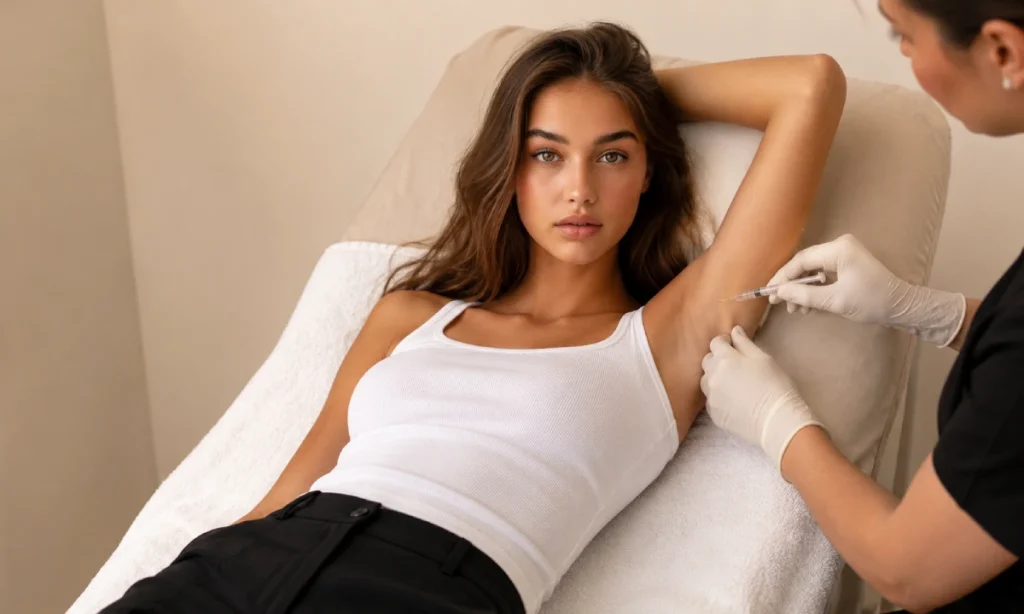
Underarm Botox is an FDA-approved treatment for primary axillary hyperhidrosis that reduces excessive sweating by temporarily blocking the nerve signals responsible for activating sweat glands.
Unlike treatments that physically remove or destroy sweat glands, Botox works by interrupting communication between the nerves and the eccrine sweat glands located in the underarm skin. As a result, the glands receive fewer signals to produce sweat, leading to a dramatic reduction in perspiration.
Botox used for hyperhidrosis contains the same purified botulinum toxin type A that has been safely used in aesthetic medicine for decades. However, instead of relaxing facial muscles to soften wrinkles, it targets the nerves involved in sweat production.
The treatment is especially beneficial for individuals whose excessive sweating interferes with everyday life despite using high-strength antiperspirants.
Many patients seek Underarm Botox because they experience problems such as:
- Visible sweat stains within minutes of getting dressed
- Frequent clothing changes throughout the day
- Difficulty wearing light-colored or fitted clothing
- Anxiety during meetings or social events
- Embarrassment caused by excessive perspiration
- Persistent moisture leading to skin irritation
- Increased body odor despite good hygiene
For people living in Dubai, where heat exposure is common throughout much of the year, controlling excessive sweating can significantly improve overall comfort and confidence.
What Is Hyperhidrosis?
Hyperhidrosis is a medical condition in which a person sweats significantly more than is necessary for regulating body temperature. The condition can affect one or several areas of the body, including the underarms, palms, soles of the feet, face, or scalp.
Sweating itself is essential. It helps cool the body during exercise, emotional stress, or exposure to heat. In hyperhidrosis, however, the sweat glands become overactive even when there is no physiological need to sweat.
This excessive sweating is not related to poor hygiene, being out of shape, or simply living in a warm climate. It results from increased stimulation of otherwise normal sweat glands.
Hyperhidrosis is generally divided into two categories.
Primary Hyperhidrosis
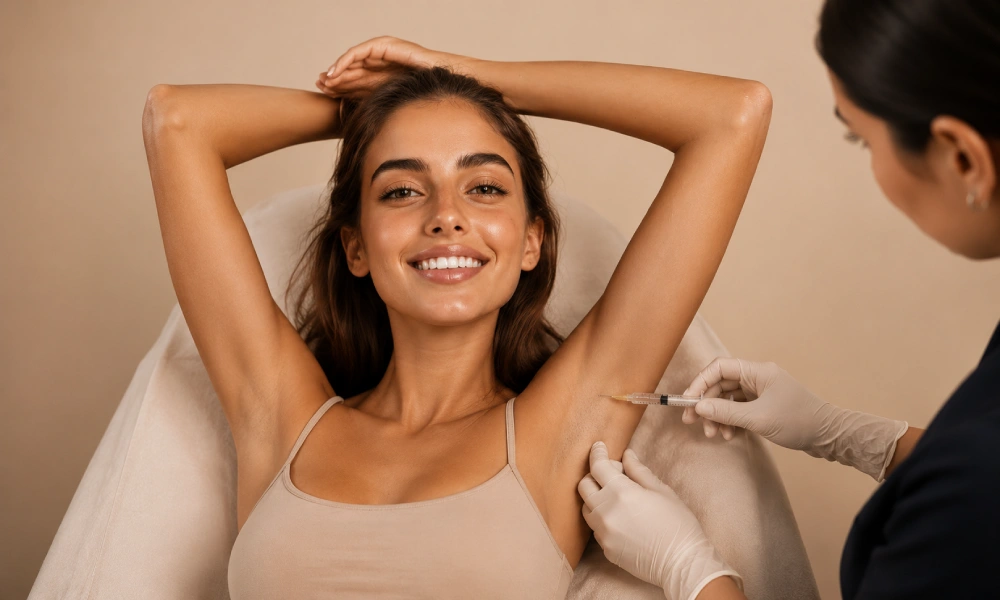
Primary hyperhidrosis is the most common form treated with Underarm Botox.
Characteristics include:
- Usually begins during adolescence or early adulthood
- Often affects both underarms equally
- Frequently runs in families
- Occurs without an underlying disease
- Can continue throughout adulthood
People with primary hyperhidrosis often notice sweating while sitting quietly, working at a computer, or spending time in air-conditioned environments.
Although emotional stress may worsen symptoms, sweating often occurs regardless of anxiety or temperature.
Many patients describe planning their wardrobe around the condition, avoiding certain fabrics, or carrying spare clothing throughout the day.
Secondary Hyperhidrosis
Secondary hyperhidrosis develops because of another medical condition or medication.
Possible causes include:
- Hyperthyroidism
- Diabetes
- Menopause
- Obesity
- Parkinson’s disease
- Certain infections
- Some antidepressants
- Opioid medications
- Hormonal disorders
Unlike primary hyperhidrosis, secondary hyperhidrosis often affects larger portions of the body and may occur during sleep.
Identifying the underlying cause is important before proceeding with cosmetic or medical treatment.
What Causes Excessive Underarm Sweating?
Sweating is controlled by the autonomic nervous system, specifically the sympathetic nerves.
In people with hyperhidrosis, these nerves become overly active and repeatedly stimulate the eccrine sweat glands even when cooling the body is unnecessary.
Researchers still do not know exactly why this happens, but several contributing factors have been identified.
These include:
- Genetics
- Increased nerve sensitivity
- Emotional stress
- Anxiety
- Heat exposure
- Hormonal fluctuations
- Certain medications
- Medical conditions
One of the most important misconceptions is that excessive sweating always results from Dubai’s hot climate.
Although high temperatures naturally increase perspiration, people with hyperhidrosis continue sweating excessively in cool indoor environments, during winter travel, or while resting.
This distinction helps physicians determine whether someone is experiencing normal sweating or a medical condition requiring treatment.
Who Is a Good Candidate for Underarm Botox?
Underarm Botox is intended for patients whose sweating significantly affects their quality of life.
You may be a suitable candidate if you:
- Have diagnosed primary axillary hyperhidrosis
- Sweat excessively even in cool environments
- Have not achieved satisfactory results with prescription antiperspirants
- Frequently change clothes because of sweat
- Feel self-conscious in professional or social situations
- Want a minimally invasive treatment
- Prefer avoiding surgery
Patients should also have realistic expectations.
Botox greatly reduces sweating but does not permanently eliminate sweat production.
Some people are not ideal candidates, including those who:
- Are pregnant or breastfeeding
- Have an infection in the treatment area
- Have certain neuromuscular disorders such as myasthenia gravis
- Are allergic to botulinum toxin ingredients
- Have unrealistic expectations regarding permanent results
During consultation, the physician evaluates whether Botox is the most appropriate option or whether another treatment such as miraDry or management of an underlying medical condition would be more suitable.
How Does Underarm Botox Work?
To understand how Botox reduces sweating, it helps to understand how sweat glands are activated.
Sweat glands do not decide when to produce sweat on their own.
Instead, they receive chemical messages from nearby nerves.
The neurotransmitter responsible for these messages is called acetylcholine.
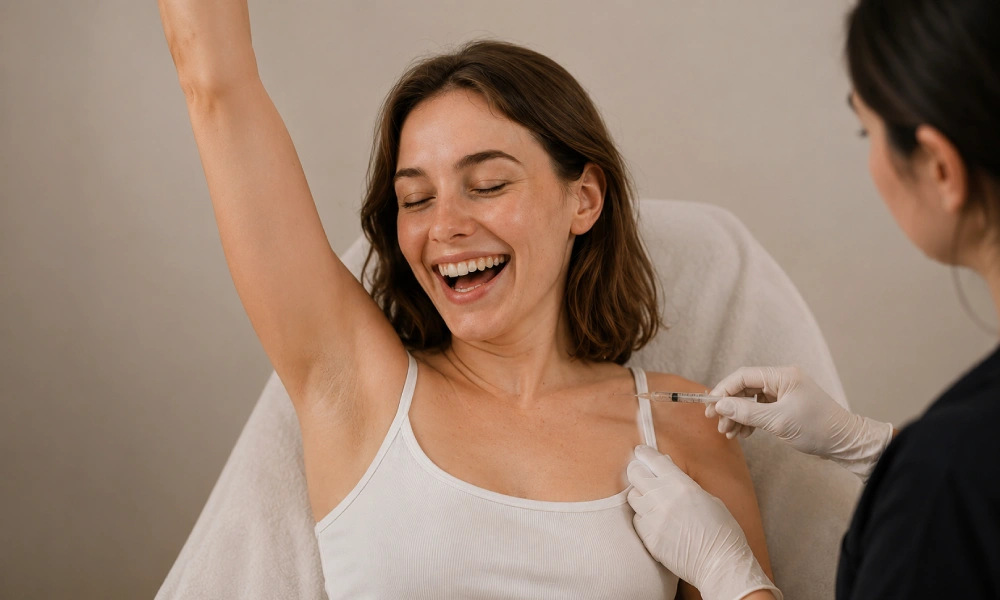
Botox temporarily blocks the release of acetylcholine.
Without acetylcholine:
- Sweat glands no longer receive activation signals.
- Sweat production decreases dramatically.
- The glands remain healthy and intact.
- Normal sweating continues in untreated areas.
This localized effect explains why patients do not lose the body’s natural ability to regulate temperature.
The treatment only affects the small region where Botox has been injected.
Because nerve endings gradually regenerate, sweating slowly returns over several months, which is why repeat treatments are needed to maintain long-term control.
How Is Underarm Botox Performed?
The procedure is straightforward and usually completed during a single outpatient visit.
Consultation and Diagnosis
Before treatment begins, a comprehensive consultation is performed.
This appointment includes:
- Reviewing medical history
- Discussing previous treatments
- Assessing the severity of sweating
- Examining the underarms
- Determining whether hyperhidrosis is primary or secondary
Some physicians perform the Minor starch-iodine test.
During this test:
- Iodine solution is applied to the skin.
- Starch powder is sprinkled over the area.
- Areas producing excessive sweat turn dark blue or purple.
This helps accurately map the regions requiring treatment.
Photographs may also be taken before treatment to document improvement during follow-up appointments.
Patients should inform their physician about:
- Blood-thinning medications
- Previous Botox treatments
- Neurological disorders
- Pregnancy plans
- Allergies
Providing a complete medical history improves treatment safety and helps personalize the injection plan.
Injection Procedure
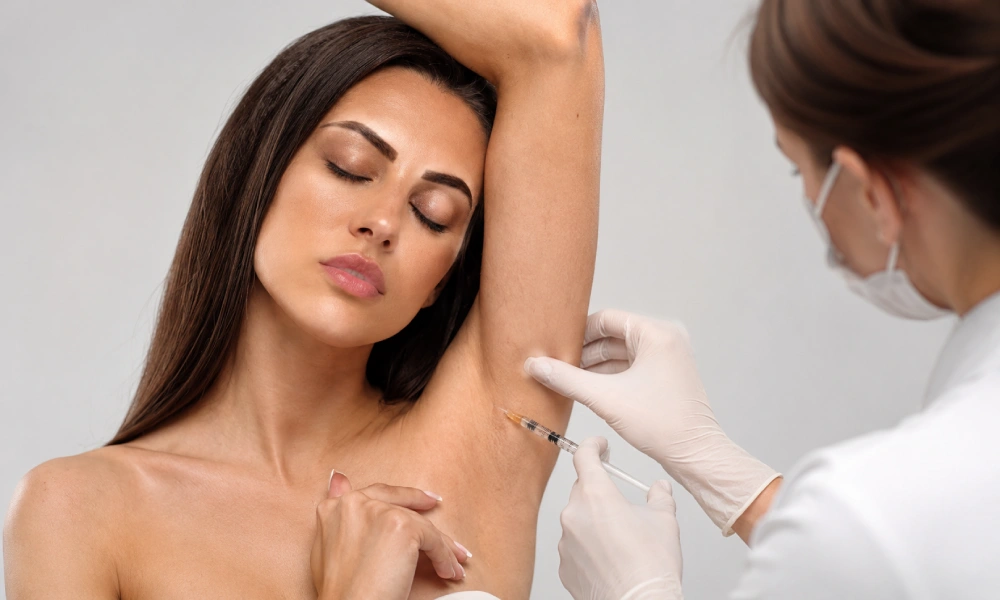
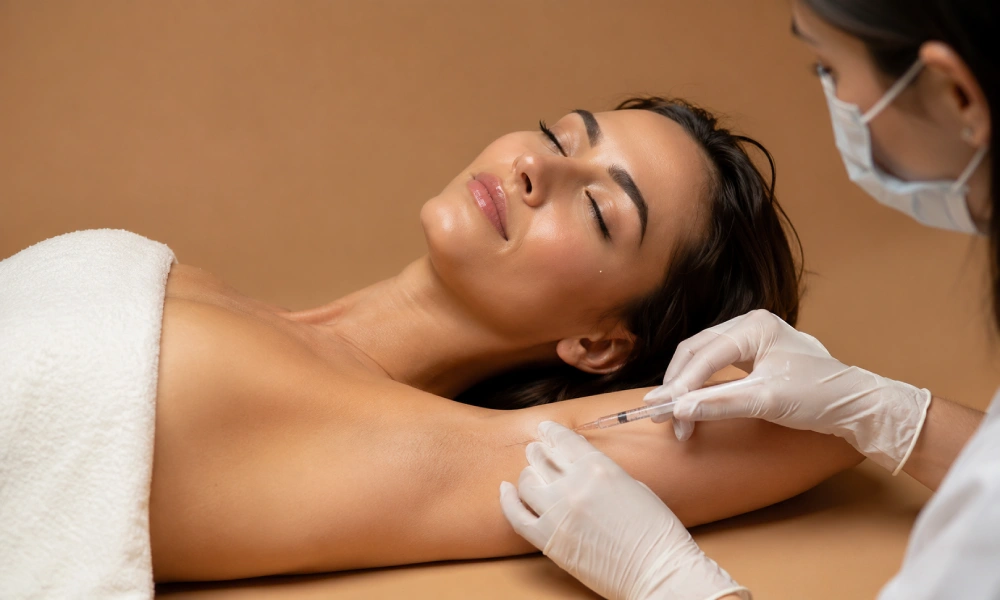
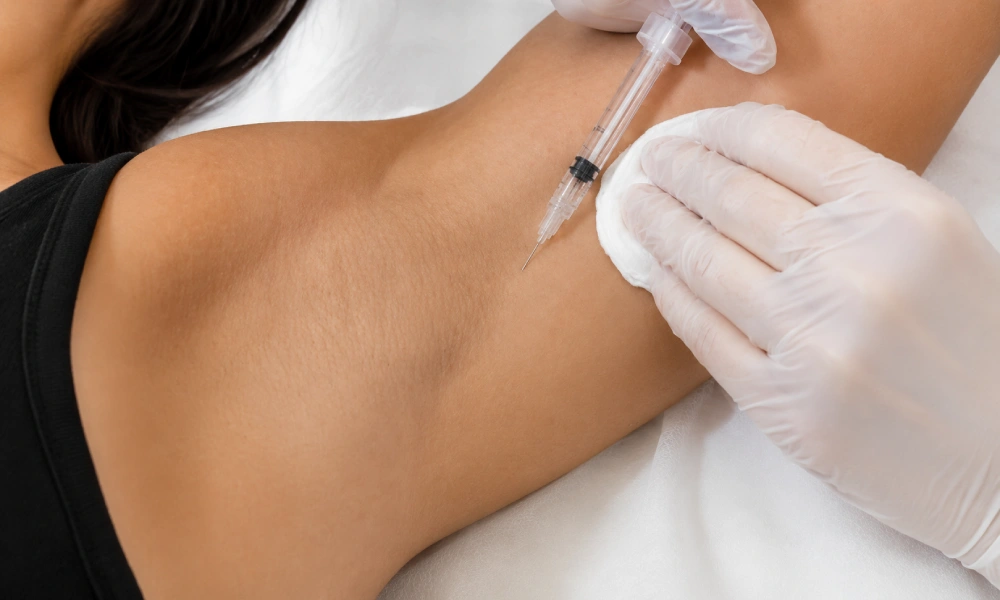
After cleaning the underarm skin, the physician marks multiple injection points across the sweat-producing area.
A very fine needle is used to place tiny amounts of Botox just beneath the skin.
Because the injections are superficial, discomfort is usually minimal.
Many patients compare the sensation to small pinches.
If necessary, topical anesthetic cream or ice packs can be applied beforehand to increase comfort.
Typically, approximately 10–20 injection sites are treated in each underarm to ensure even distribution.
The exact number depends on:
- Size of the underarm
- Sweat pattern
- Severity of symptoms
- Required Botox dosage
Precision is important because uneven placement may reduce effectiveness.
Treatment Duration
The complete appointment generally lasts between 20 and 30 minutes.
The injections themselves usually require less than fifteen minutes.
Patients are able to:
- Return to work immediately
- Drive themselves home
- Resume most daily activities
- Continue normal routines with minimal interruption
No general anesthesia, stitches, or surgical incisions are required.
Because there is virtually no downtime, many patients schedule treatment during a lunch break.
Benefits of Underarm Botox
Underarm Botox offers advantages that extend well beyond reducing perspiration.
For many patients, the treatment improves daily comfort, emotional well-being, and confidence in situations that previously caused embarrassment.
Some of the most significant benefits include:
- Clinically proven reduction in excessive sweating
- FDA-approved treatment for primary axillary hyperhidrosis
- Non-surgical procedure
- Minimal discomfort
- No significant downtime
- Quick outpatient treatment
- High patient satisfaction
- Improved confidence in professional settings
- Greater clothing flexibility
- Reduced sweat stains
- Less dependence on prescription antiperspirants
- Lower risk of moisture-related skin irritation
- Improvement in quality of life
Patients frequently report that they no longer have to wear dark clothing exclusively or carry extra shirts during the day.
Many also feel more comfortable participating in social gatherings, business meetings, public speaking, and outdoor activities.
Importantly, reducing excessive moisture can also decrease bacterial growth responsible for unpleasant body odor.
The treatment therefore addresses both excessive sweating and one of its most common secondary concerns.
Underarm Botox Before and After
For most patients, the biggest change after Underarm Botox is not something others immediately notice—it is the confidence of going through an entire day without worrying about visible sweat marks or damp clothing. While the treatment does not completely eliminate perspiration, it can reduce underarm sweating by 80–90% in appropriately selected patients.
Results are not immediate. The botulinum toxin gradually blocks the nerve signals responsible for activating sweat glands, so improvements develop over several days.
A typical treatment journey looks like this:
| Timeline | What You May Notice |
| Day 1–2 | Mild redness or small bumps at injection sites; sweating usually unchanged |
| Day 3–5 | Early reduction in perspiration begins |
| Week 1 | Noticeably drier underarms during daily activities |
| Week 2 | Maximum effect for most patients |
| Month 4–6 | Gradual return of sweating as nerve activity recovers |
Patients often describe practical improvements rather than dramatic visual changes.
Before treatment, they may experience:
- Large sweat patches within minutes of getting dressed
- Constant concern about shaking hands or raising their arms
- Carrying spare shirts to work
- Avoiding fitted or brightly colored clothing
- Frequent deodorant reapplication
- Anxiety during presentations, meetings, or social events
After treatment, many report:
- Clothing staying dry throughout the day
- Increased confidence at work and social gatherings
- Less concern about body odor caused by persistent moisture
- Greater freedom to wear different fabrics and colors
- Improved comfort during outdoor activities in Dubai’s climate
The degree of improvement varies between individuals. Factors such as the severity of hyperhidrosis, the number of Botox units injected, and individual response all influence results.
Clinical photographs taken before and after treatment can help document improvement, although the most meaningful outcome is usually the patient’s own experience of reduced sweating and improved quality of life.
Recovery and Aftercare Following Underarm Botox
Recovery after Underarm Botox is typically simple. Because the injections are placed just beneath the skin, most patients return to work or other routine activities immediately after leaving the clinic.
Unlike surgical procedures, there are no incisions, stitches, or dressings.
Recovery Timeline
Most people recover according to the following timeline:
| Time | Recovery |
| Immediately after treatment | Mild redness and tiny bumps at injection sites |
| First 24 hours | Mild tenderness may persist |
| Days 2–4 | Skin usually appears completely normal |
| Days 3–7 | Sweating gradually decreases |
| Days 10–14 | Maximum treatment effect develops |
Temporary bruising may occur in a small percentage of patients but generally resolves within several days.
Aftercare Instructions
Proper aftercare helps reduce irritation and supports optimal treatment results.
Patients are generally advised to:
- Avoid strenuous exercise for 24 hours.
- Skip saunas, steam rooms, and very hot baths on the first day.
- Avoid applying irritating skincare products immediately after treatment.
- Keep the area clean and dry.
- Avoid aggressive rubbing or massage of the treated skin.
- Delay underarm waxing or laser hair removal for several days if possible.
- Wear loose-fitting clothing on the day of treatment.
Normal showering is usually permitted later the same day.
Most patients can return to office work immediately without restrictions.
If unusual swelling, increasing pain, fever, or signs of infection develop, the treating physician should be contacted promptly.
How Long Does Underarm Botox Last?
One of the most common questions patients ask is how often they will need treatment.
For most individuals, Underarm Botox remains effective for approximately four to six months.
Some patients continue experiencing significant sweat reduction for up to eight or nine months, while others notice gradual recurrence closer to the four-month mark.
Several factors influence longevity:
- Individual metabolism
- Severity of hyperhidrosis
- Total Botox dosage
- Injection technique
- Previous treatment history
- Overall nerve regeneration rate
The treatment gradually wears off rather than stopping suddenly. Many patients notice that sweating slowly returns over several weeks.Scheduling repeat treatment before symptoms become severe again often provides the most consistent long-term control.Interestingly, some individuals report longer-lasting results after several treatment cycles, although this varies and should not be expected in every patient.
Risks and Side Effects of Underarm Botox
Underarm Botox has an excellent safety profile when administered by a qualified physician using appropriate dosing and injection techniques.
As with any injectable treatment, however, side effects and complications are possible.
Understanding both the benefits and the risks helps patients make informed decisions.
Common Side Effects
Most side effects are mild and temporary.
These may include:
- Mild redness
- Small injection-site bumps
- Tenderness
- Temporary bruising
- Slight swelling
- Mild itching
These symptoms generally resolve within a few hours to several days.
Patients can usually continue normal daily activities without interruption.
Rare Complications
Serious complications are uncommon but may include:
- Local infection
- Allergic reaction
- Temporary muscle weakness near the treatment area
- Uneven reduction in sweating
- Temporary numbness
- Headache
- Flu-like symptoms
One concern patients often ask about is compensatory sweating, meaning increased sweating in other parts of the body.
Unlike surgical sympathectomy, compensatory sweating after Underarm Botox is considered uncommon and is usually mild when it occurs.
Receiving treatment from an experienced injector significantly reduces the likelihood of uneven dosing and unnecessary complications.
Underarm Botox vs Prescription Antiperspirants
Prescription antiperspirants are often recommended before Botox.
However, they work very differently.
| Feature | Underarm Botox | Prescription Antiperspirants |
| How it works | Blocks nerve signals | Blocks sweat ducts |
| Treatment frequency | Every 4–6 months | Daily |
| Effectiveness | High | Mild to moderate |
| Skin irritation | Usually minimal | Common in sensitive skin |
| Suitable for severe hyperhidrosis | Yes | Often insufficient |
Patients with mild sweating may achieve adequate control using prescription-strength aluminum chloride antiperspirants.
Those with moderate to severe hyperhidrosis often require a more effective treatment such as Botox.
Underarm Botox vs miraDry
Botox and miraDry are both popular treatments for excessive underarm sweating, but they are fundamentally different.
| Feature | Underarm Botox | miraDry |
| Technology | Injectable botulinum toxin | Microwave energy |
| Goal | Temporarily blocks sweat gland activation | Permanently destroys many sweat glands |
| Procedure | Injections | Device-based treatment |
| Downtime | Minimal | Mild swelling for several days |
| Duration | 4–6 months | Long-lasting reduction |
| Repeat treatments | Yes | Usually one or two sessions |
Patients who want a temporary, highly predictable treatment with virtually no downtime often choose Botox.
Patients seeking a longer-lasting reduction in sweat glands may prefer miraDry after discussing suitability with their physician.
The best option depends on lifestyle, budget, expectations, and medical evaluation.
How Many Botox Units Are Needed for Underarm Sweating?
The exact dose varies depending on the patient’s anatomy and the severity of sweating.
However, clinical guidelines commonly recommend:
- Approximately 50 units per underarm
- Around 100 units total for both underarms
Some patients with larger treatment areas or severe hyperhidrosis may require slightly different dosing.
Using an individualized treatment plan is important because:
- Under-treatment may reduce effectiveness.
- Over-treatment offers little additional benefit.
- Proper distribution is as important as the total number of units.
An experienced physician will determine the appropriate dosage after evaluating the affected area.
Underarm Botox Cost in Dubai
The price of Underarm Botox in Dubai varies between clinics because treatment is personalized rather than standardized.
Several factors influence the overall cost, including:
- Number of Botox units required
- Experience and qualifications of the physician
- Reputation of the clinic
- Brand of botulinum toxin used
- Complexity of the treatment plan
- Whether follow-up appointments are included
While choosing the lowest price may seem attractive, expertise should be a major consideration.
Proper diagnosis, accurate injection mapping, and individualized dosing contribute significantly to treatment success and patient safety.
Why Choose Dr. Ali for Underarm Botox in Dubai?
Successful treatment of excessive sweating begins with an accurate diagnosis rather than simply administering injections.
Dr. Ali evaluates each patient individually to determine:
- Whether the sweating represents primary or secondary hyperhidrosis
- Whether Botox is the most appropriate treatment
- The optimal treatment area
- The appropriate number of Botox units
- Long-term management strategies
Rather than applying a standard injection pattern to every patient, treatment is customized according to the individual’s symptoms, anatomy, and lifestyle.
Patients in Dubai often seek treatment before important life events, professional commitments, weddings, or during the hottest months of the year. A personalized approach helps ensure natural, effective sweat reduction while maintaining normal physiological function.