
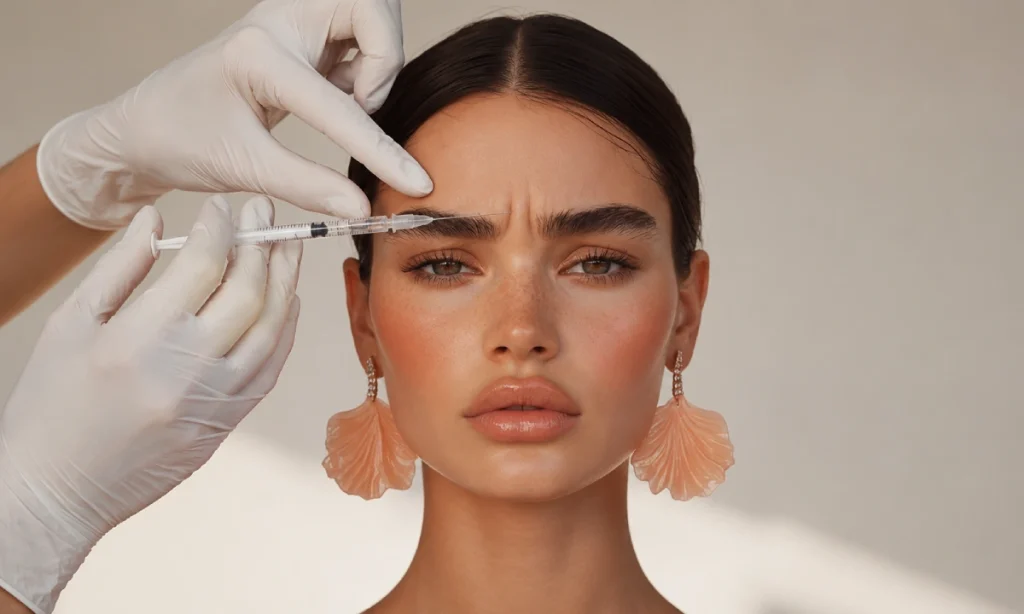
What Is Frown Line Botox?
Frown line Botox is a non-surgical cosmetic treatment that uses purified botulinum toxin type A to relax the muscles responsible for the vertical lines between the eyebrows. These lines, known clinically as glabellar lines, form when the corrugator and procerus muscles repeatedly contract during facial expressions.
When small, measured amounts of Botox are injected into these specific muscles, the nerve signals that trigger contraction are temporarily blocked. The muscles soften, the overlying skin smooths, and the frown lines become noticeably less visible. Importantly, the treatment targets only the muscles responsible for frowning, so the rest of your facial expressions remain natural.
The procedure is quick, minimally invasive, and requires no incisions or downtime. For many people, it is the first cosmetic treatment they ever try, precisely because the results are predictable and fully reversible over time.
Types of Frown Lines and Why They Form
Not all frown lines look the same, and understanding your specific pattern helps your injector tailor the treatment.
The most common presentation is the classic “11 lines”—two parallel vertical creases sitting directly between the eyebrows. Some people develop a single deep central line, while others show a more complex pattern of multiple shorter creases that fan outward.
Several factors contribute to how and when these lines appear:
| Cause |
How It Contributes |
|
Repeated muscle movement |
Frowning, squinting, and concentrating thousands of times creates fixed creases |
|
Aging |
Collagen and elastin decline, so skin recovers more slowly from folding |
| Sun exposure |
UV damage breaks down supportive skin structures and accelerates lines |
|
Genetics |
Muscle strength and skin thickness are partly inherited |
| Facial habits |
Squinting in bright light or while reading screens deepens the pattern |
In younger people, frown lines are often dynamic—visible only during expression. With time, they become static, remaining etched into the skin even at rest. This distinction matters because dynamic lines respond exceptionally well to Botox, while deeply set static lines may need a combined approach.
Why Get Botox for Frown Lines?
The muscles between your eyebrows are remarkably active. Every time you focus on a screen, step into sunlight, or feel a flash of stress, they contract. This constant folding is what gradually carves permanent lines into the skin.
The main reason to treat frown lines with Botox is to interrupt this cycle before the creases become permanently fixed. By relaxing the muscles, the skin gets a chance to rest and recover, and existing lines soften. Beyond the cosmetic benefit, many people seek treatment because persistent frown lines can make them look perpetually angry, worried, or older than they feel.
Does Botox Remove Frown Lines Completely?
The honest answer depends on the depth of the lines. For dynamic frown lines that appear mainly during expression, Botox can smooth them dramatically—often to the point where they are barely visible.
For static lines that have become deeply etched over many years, Botox significantly softens their appearance but may not erase them entirely in a single session. In these cases, combining Botox with dermal fillers or treatments that stimulate collagen often produces the best result. Repeated, consistent treatment over time also tends to improve outcomes, as the muscles gradually weaken and the skin has ongoing opportunity to recover.
Frown Line Botox at Dr. Ali Clinic
At Dr. Ali’s clinic in Dubai, frown line treatment begins with a careful assessment of your facial anatomy, muscle strength, and the specific pattern of your lines. No two faces move in exactly the same way, so the injection plan is customized rather than applied from a fixed template.
The clinic prioritizes natural-looking results. The goal is never a frozen, expressionless forehead, but a softened, refreshed appearance where you still look like yourself—just more rested. Using precise dosing and accurate placement, treatment aims to relax the frown muscles while preserving balanced, natural movement across the rest of the face. Every session follows established safety standards, with attention to hygiene, product quality, and post-treatment guidance.
How Frown Line Botox Is Done: Step by Step
The treatment itself is fast, but each stage matters for a safe, even result.
- Consultation and assessment. Your injector examines your frown lines at rest and during movement, asking you to frown so the active muscles can be identified.
- Cleansing. The treatment area is cleaned thoroughly to minimize any risk of infection.
- Marking injection points. Precise points are identified over the corrugator and procerus muscles, mapped to your individual anatomy.
- Injection. Using a very fine needle, small amounts of Botox are injected into the marked points. Most people describe only a brief pinching sensation.
- Aftercare guidance. You receive clear instructions on what to do—and avoid—over the following hours and days.
The entire process usually takes around ten to fifteen minutes, which is why Botox is often called a “lunchtime treatment.”
What Are the Injection Points for Frown Line Botox?
Frown line treatment focuses on a small cluster of muscles in the glabellar region. The exact number of points and units varies based on muscle strength, gender, and the depth of the lines.
| Injection Area | Target Muscle | Approximate Units |
| Central glabella | Procerus | 4–6 units |
| Inner brow (left) | Corrugator supercilii | 4–6 units |
| Inner brow (right) | Corrugator supercilii | 4–6 units |
| Mid-brow points (optional) | Corrugator supercilii | 2–4 units total |
Total dosing for frown lines commonly falls in the range of 16 to 25 units, though men frequently require higher amounts because their muscles tend to be stronger. These figures are general guidelines—your injector determines the precise plan based on examination.
Discover the Benefits of Frown Line Botox
Softening an Angry, Tense Appearance
Deep frown lines often send an unintended message, making you appear annoyed, stern, or unapproachable even when you feel perfectly relaxed. Smoothing these creases helps your face communicate what you actually feel, giving you a calmer, friendlier resting expression.
A Younger Look Without Surgery
Botox offers visible rejuvenation without the cost, risk, or recovery of surgery. By relaxing the muscles that crease the skin, it produces a smoother, more youthful upper face in minutes—no anesthesia, no incisions, no extended downtime.
Preventing Lines from Becoming Permanent
One of the most valuable benefits is preventive. By limiting the repeated muscle contractions that etch lines into the skin, early and consistent treatment can stop dynamic lines from hardening into permanent static creases. Many people in their late twenties and thirties begin treatment for exactly this reason.
Reliable Duration and Repeatability
Botox results are temporary, but this is also part of its appeal. The effect is predictable, and if you are ever unhappy, it gradually fades on its own. Treatment can be safely repeated, and with consistent sessions, results often last longer over time as the muscles become less active.
How Long Does Frown Line Botox Last?
For most people, the results of frown line Botox last between three and four months. The exact duration varies depending on individual metabolism, muscle strength, the dose used, and lifestyle factors such as intense physical activity, which can shorten how long the effect persists.
The first treatment sometimes wears off slightly faster. With repeated sessions, many people find the results last progressively longer, because the treated muscles gradually weaken and contract less forcefully. To maintain a consistently smooth appearance, most people schedule follow-up treatments three to four times per year.
When Will You See the Results of Frown Line Botox?
Botox does not work instantly. The first subtle changes typically begin to appear within two to three days after treatment, as the muscle-relaxing effect starts to take hold.
The full result usually becomes visible after about ten to fourteen days, once the Botox has fully settled and the targeted muscles have relaxed completely. For this reason, it is best to wait two full weeks before judging the final outcome or considering any minor touch-up. If a small adjustment is needed, your injector can review the area at a follow-up appointment after this period.
Aftercare Following Frown Line Botox
Good aftercare protects your results and reduces the small risk of side effects. The hours immediately following treatment are the most important.
|
Do |
Avoid |
| Stay upright for at least 4 hours | Lying down or bending over for 4 hours |
| Gently exercise facial muscles (frown, raise brows) | Rubbing or massaging the treated area |
| Apply light makeup gently if needed | Strenuous exercise for 24 hours |
| Keep the area clean | Saunas, hot tubs, and sun exposure for 24–48 hours |
| Follow your injector’s specific advice | Alcohol on the day of treatment |
How to Sleep After Botox
For the first night, sleep on your back with your head slightly elevated. Avoid sleeping face-down or pressing the treated area into your pillow for at least the first few hours, as pressure can theoretically affect how the product settles before it binds to the muscle.
Coloring Your Hair After Botox
Hair coloring does not directly interfere with Botox, but it is sensible to wait a day or two before a salon visit. The main concern is the head-tilting position during washing and the scalp massage involved, both of which are best avoided in the first 24 hours. When in doubt, give it a couple of days.
Washing Your Face After Botox
You can wash your face gently the same day, but use light, careful motions and avoid vigorous scrubbing or massaging over the injection sites for the first 24 hours. Pat your skin dry rather than rubbing, and skip facial rollers, harsh cleansing brushes, or strong massage tools for at least a day.
How Long Is the Recovery After Frown Line Botox?
One of the biggest advantages of Botox is that there is essentially no downtime. Most people return to their normal daily routine immediately after leaving the clinic.
You may notice small red dots or minor swelling at the injection points, but these usually fade within a few hours. Mild bruising occasionally appears and can take a few days to resolve, though it is easily covered with makeup. There is no need to take time off work or pause most daily activities—only strenuous exercise and the specific aftercare restrictions need attention for the first day.
Who Is Frown Line Botox Suitable For?
Frown line Botox is appropriate for most healthy adults who are bothered by the vertical lines between their eyebrows and want a non-surgical solution. It suits both women and men, and is increasingly popular among younger adults seeking to prevent lines from deepening as well as older adults wanting to soften established creases.
Good candidates generally have realistic expectations, are in good overall health, and understand that results are temporary and require maintenance.
Who Should Not Get Frown Line Botox?
Botox is not suitable for everyone. The treatment is generally not recommended for:
- People who are pregnant or breastfeeding
- Those with certain neuromuscular disorders, such as myasthenia gravis or ALS
- Anyone with a known allergy to botulinum toxin or its components
- People with an active skin infection or inflammation in the treatment area
- Those with unrealistic expectations about what the treatment can achieve
If you take certain medications—particularly some muscle relaxants or antibiotics—or have an underlying medical condition, it is essential to discuss this during your consultation so your injector can advise whether treatment is safe for you.