
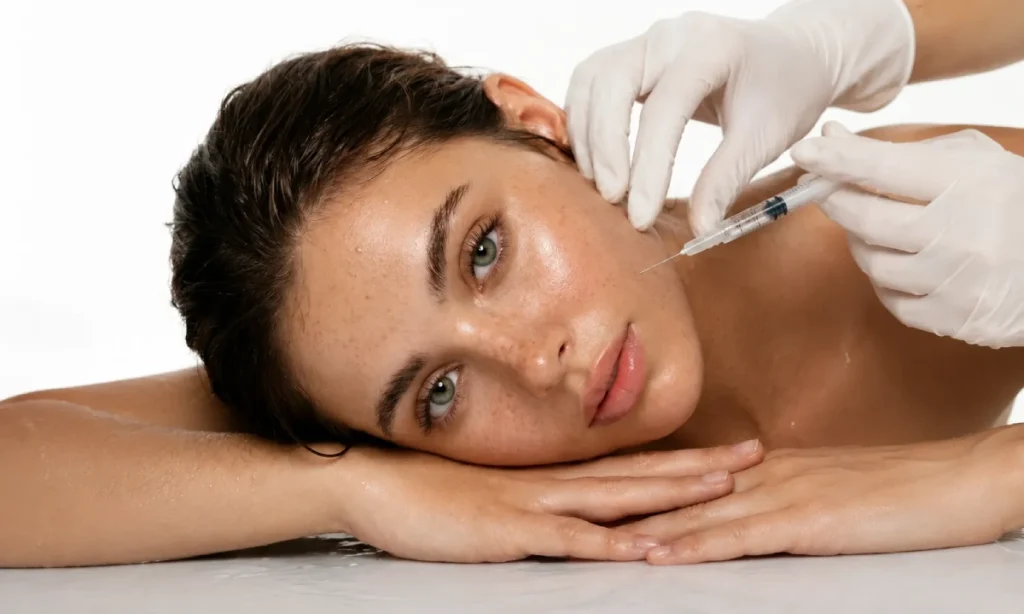
What Is Facial Mesotherapy?
Facial mesotherapy is a minimally invasive cosmetic procedure in which small amounts of specially formulated active ingredients are injected into the superficial and middle layers of the skin using fine needles or automated injection devices.
The objective is to nourish the skin directly, stimulate fibroblast activity, improve microcirculation, and encourage the natural production of collagen and elastin. Instead of changing facial contours or adding volume like dermal fillers, mesotherapy focuses on improving skin quality, hydration, texture, and radiance.
A mesotherapy solution may contain one or more of the following ingredients depending on the patient’s needs:
- Hyaluronic acid for hydration
- Vitamins (A, B-complex, C, E)
- Amino acids
- Peptides
- Minerals
- Coenzymes
- Antioxidants
- Growth factor stimulators
- Nucleotides
The exact formulation should always be selected after a professional skin assessment to ensure optimal safety and effectiveness.
Facial mesotherapy is commonly recommended for individuals seeking skin rejuvenation without surgery or prolonged downtime.
Facial Mesotherapy Clinic in Dubai
Choosing the right clinic is one of the most important factors influencing both treatment safety and aesthetic outcomes. Although facial mesotherapy is considered a minimally invasive procedure, successful results depend heavily on proper patient assessment, injection technique, product quality, and adherence to strict sterile protocols.
At Dr. Ali Clinic in Dubai, every patient undergoes a comprehensive consultation before treatment. The physician carefully evaluates skin hydration, elasticity, pigmentation, texture, pore size, previous aesthetic procedures, and overall skin health to develop a personalized mesotherapy treatment plan based on individual needs.
Patients can expect:
- Consultation with an experienced aesthetic physician
- Individualized treatment planning
- High-quality mesotherapy products
- Sterile injection techniques
- Modern aesthetic equipment
- Comprehensive skin assessment
- Personalized aftercare instructions
- Follow-up sessions when appropriate
Rather than using the same approach for every patient, Dr. Ali Clinic tailors each facial mesotherapy treatment according to the patient’s skin condition and aesthetic goals, helping achieve natural-looking skin rejuvenation while prioritizing safety and clinical standards.
When choosing a mesotherapy clinic, patients should not base their decision solely on price. The physician’s expertise, knowledge of facial anatomy, product quality, and commitment to patient safety are the most important factors in achieving safe and effective results.
Facial Mesotherapy Injection Procedure
A facial mesotherapy session generally takes between 20 and 40 minutes, depending on the treatment area and the technique used.
The procedure usually involves the following steps:
- Skin cleansing and disinfection
- Clinical assessment of treatment areas
- Application of topical anesthetic if necessary
- Preparation of the selected mesotherapy cocktail
- Multiple microinjections across targeted facial regions
- Gentle post-treatment cleansing
- Application of soothing products
- Aftercare instructions
Several injection techniques may be used depending on the patient’s skin condition, including nappage, point-by-point injections, papule technique, or automated mesotherapy devices.
Most patients experience only mild discomfort because extremely fine needles are used.
Visible redness and tiny injection marks generally subside within a few hours to two days.
Injection Depth
The depth of facial mesotherapy injections varies according to the treatment objective, skin thickness, and anatomical location.
In most facial rejuvenation procedures, injections are performed approximately 1–4 mm beneath the skin surface, targeting the superficial or mid-dermis where fibroblasts, collagen fibers, and extracellular matrix components are located.
Typical injection depths include:
- 1–2 mm: Hydration and skin glow
- 2–3 mm: Fine lines and enlarged pores
- 3–4 mm: Acne scars, skin laxity, and collagen stimulation
Proper injection depth is essential because overly superficial injections may reduce product diffusion, while injections that are too deep may decrease treatment effectiveness or increase the likelihood of bruising.
For this reason, facial mesotherapy should only be performed by qualified medical professionals with a thorough understanding of facial anatomy.
How Many mL Are Injected During Facial Mesotherapy?
The amount of solution injected depends on several clinical factors, including:
- Treatment area
- Skin condition
- Patient age
- Product concentration
- Treatment goals
- Physician’s injection technique
On average, 2 to 5 mL of mesotherapy solution may be used during a full-face treatment session.
Smaller treatment areas, such as under the eyes or localized scars, generally require considerably less product.
Using a larger volume does not necessarily produce better results. Instead, successful treatment depends on selecting an appropriate formulation, accurate injection depth, and a treatment plan tailored to the patient’s skin condition.
Multiple treatment sessions are often recommended because skin rejuvenation occurs gradually as collagen remodeling and cellular repair processes take place over time.
Which Skin Types Benefit from Facial Mesotherapy?
Facial mesotherapy is not designed for just one skin type. Instead, it is customized according to the patient’s skin condition, age, and aesthetic concerns. By selecting the appropriate combination of active ingredients, physicians can address hydration deficiencies, texture irregularities, pigmentation, and early signs of aging.
The table below summarizes the common skin concerns that may benefit from facial mesotherapy.
| Skin Concern | Can Mesotherapy Help? | Expected Benefits |
| Orange peel skin texture | ✓ Yes | Improves skin smoothness and elasticity |
| Enlarged pores | ✓ Yes | Refines skin texture and minimizes pore appearance |
| Stretch marks (selected cases) | ✓ May help | Supports collagen remodeling and skin repair |
| Dry and dehydrated skin | ✓ Yes | Deep hydration and improved skin barrier |
| Dull and tired-looking skin | ✓ Yes | Brighter, healthier complexion |
| Fine lines | ✓ Yes | Improves skin quality and softens superficial wrinkles |
| Acne scars | ✓ Yes | Enhances skin regeneration and texture |
| Uneven skin tone | ✓ Yes | Supports a more balanced complexion |
Mesotherapy is most effective when combined with an individualized skincare routine and, when appropriate, complementary aesthetic treatments recommended by a qualified physician.
Orange Peel Skin
Orange peel skin refers to an uneven, rough skin texture characterized by visible depressions and irregularities. It is commonly associated with reduced collagen support, enlarged pores, dehydration, and photoaging.
Facial mesotherapy may improve this condition by delivering hydrating and regenerative ingredients directly into the dermis. These ingredients stimulate fibroblast activity, promote collagen synthesis, and enhance skin elasticity, resulting in a smoother and more refined surface over multiple treatment sessions.
Although improvement is gradual, many patients notice healthier skin texture after completing a series of treatments.
Enlarged Pores
Enlarged pores are a common cosmetic concern that can make the skin appear uneven and oily. Genetics, excessive sebum production, aging, acne history, and loss of collagen all contribute to increased pore visibility.
Mesotherapy does not physically “close” pores, but it can reduce their appearance by improving skin firmness, hydration, and collagen density around the follicular openings.
When combined with appropriate skincare and sun protection, mesotherapy can contribute to a smoother, more refined complexion with less noticeable pores.
Stretch Marks
Although stretch marks are more commonly treated on the abdomen, thighs, hips, or arms, facial stretch-like scars and areas of dermal thinning may also benefit from selected mesotherapy formulations.
The treatment aims to stimulate tissue regeneration through ingredients such as amino acids, peptides, vitamins, and hyaluronic acid, encouraging collagen remodeling within the affected skin.
Results vary depending on the age, depth, and severity of the marks. Newer stretch marks generally respond better than older, mature lesions, and multiple sessions are usually required for noticeable improvement.
Types of Facial Mesotherapy Injection Areas
Facial mesotherapy can be performed in multiple anatomical regions depending on the patient’s concerns. Rather than treating the face as a single unit, physicians often target specific areas where skin quality, hydration, or elasticity has declined.
The injection pattern and formulation are adjusted according to the thickness of the skin and the desired treatment outcome.
Forehead Mesotherapy
The forehead is one of the earliest facial regions to develop fine lines due to repeated muscle movement, sun exposure, and natural collagen loss.
Mesotherapy in this area focuses on improving skin hydration, elasticity, and overall quality rather than relaxing muscles. By nourishing the dermis with vitamins, peptides, and hyaluronic acid, the treatment may soften superficial lines and enhance skin smoothness.
Deep dynamic wrinkles caused by muscle activity may require additional treatments such as neuromodulators for optimal correction.
Eyebrow Mesotherapy
The skin surrounding the eyebrows gradually loses firmness with age, contributing to a tired appearance.
Mesotherapy around the eyebrow region supports skin hydration and collagen production, helping improve skin quality and providing a subtle lifting effect through enhanced tissue firmness.
Treatment plans should always respect the delicate vascular anatomy surrounding the eyes.
Under-Eye Mesotherapy
The under-eye area has some of the thinnest skin on the face, making it particularly susceptible to dehydration, fine lines, and dullness.
Specialized mesotherapy formulations designed for this delicate region may help improve hydration, skin texture, and overall brightness while reducing the appearance of superficial crepey skin.
Because the under-eye area contains important blood vessels and delicate structures, injections should only be performed by experienced medical professionals using appropriate techniques.
Nose Mesotherapy
Mesotherapy around the nose is occasionally performed to improve skin texture, enlarged pores, and excessive oil production.
Unlike dermal fillers, mesotherapy does not reshape the nose or alter its structure. Instead, it enhances the quality of the overlying skin by delivering active ingredients that support hydration and cellular repair.
Temple Mesotherapy
The temple region may develop thinner skin and reduced elasticity with age.
Mesotherapy in this area aims to improve skin quality, hydration, and collagen stimulation. It is important to note that mesotherapy does not restore lost facial volume; patients with significant temporal hollowing may require alternative treatments such as dermal fillers after proper medical evaluation.
Lip Mesotherapy
Lip mesotherapy is intended to improve hydration and the condition of the skin around the lips rather than increase lip volume.
Hydrating ingredients help reduce dryness, improve softness, and enhance the appearance of fine perioral lines. Patients seeking fuller lips generally require hyaluronic acid fillers instead of mesotherapy.
Double Chin Mesotherapy
Mesotherapy may also be used as part of a treatment plan for mild submental fullness (double chin), depending on the formulation used.
Certain lipolytic mesotherapy solutions are designed to target localized fat deposits beneath the chin while supporting skin tightening. Suitable candidates typically have mild to moderate fat accumulation with good skin elasticity.
Patients with significant excess fat or severe skin laxity may benefit from alternative procedures after a comprehensive medical assessment.
What Are the Benefits of Facial Mesotherapy?
Facial mesotherapy is valued for its ability to improve overall skin quality rather than simply masking cosmetic concerns. By delivering bioactive ingredients directly into the dermis, the treatment supports hydration, collagen production, and cellular regeneration. The exact benefits vary depending on the formulation used and the individual’s skin condition.
Key Benefits of Facial Mesotherapy
- Improves skin hydration
- Enhances skin radiance and glow
- Refines skin texture
- Reduces the appearance of enlarged pores
- Stimulates collagen and elastin production
- Softens fine lines
- Improves skin elasticity
- Supports acne scar remodeling
- Helps reduce pigmentation and uneven skin tone
- Promotes healthier-looking skin
- Minimal downtime
- Suitable for preventive and corrective skin rejuvenation
Acne Scar Treatment
Acne scars develop when inflammation damages the skin’s collagen network during the healing process. Depending on their depth and type, scars may appear as depressions, irregular texture, or uneven skin tone.
Facial mesotherapy can support skin regeneration by stimulating fibroblast activity and collagen synthesis. While it cannot completely eliminate deep acne scars, it may improve superficial scarring, skin texture, and overall smoothness.
For moderate to severe scars, mesotherapy is often combined with treatments such as microneedling, fractional laser resurfacing, or subcision for enhanced results.
Reducing Facial Pigmentation
Uneven pigmentation may result from sun exposure, post-inflammatory changes, hormonal fluctuations, or skin aging.
Selected mesotherapy formulations contain antioxidants, vitamins, peptides, and brightening agents that help improve overall skin tone while supporting healthy cellular turnover.
Although mesotherapy may reduce the appearance of mild pigmentation, successful management also requires daily sunscreen use and treatment of the underlying cause.
Reducing Fine Lines and Wrinkles
As collagen and elastin production naturally declines with age, the skin gradually develops fine lines and superficial wrinkles.
Facial mesotherapy replenishes hydration and stimulates dermal remodeling, helping soften early signs of aging and improve skin elasticity.
It is important to understand that mesotherapy enhances skin quality but does not replace treatments designed to relax facial muscles or restore lost volume.
Skin Tightening and Mild Laxity
Loss of collagen contributes to decreased skin firmness over time.
Mesotherapy promotes collagen production within the dermis, helping improve skin elasticity and creating a firmer, healthier appearance.
Patients with mild skin laxity often experience noticeable improvement after completing a full treatment course. More advanced skin sagging may require additional procedures such as energy-based treatments or surgical lifting.
Facial Lifting
Although facial mesotherapy is not a lifting procedure in the surgical sense, improved hydration, collagen stimulation, and dermal support can produce a subtle lifting effect.
The skin often appears firmer, smoother, and more refreshed after treatment, particularly in patients with early signs of aging.
Mesotherapy is best viewed as a skin rejuvenation treatment rather than a replacement for facelift surgery or dermal fillers.
Treatment for Facial Volume Loss
Significant facial volume loss is primarily caused by reductions in fat pads and bone support rather than dehydration alone.
Mesotherapy does not restore facial volume. However, it improves skin quality, elasticity, and hydration, making the face appear healthier and more vibrant.
Patients with marked facial hollowing generally require dermal fillers or other volume-restoring procedures as determined during a medical consultation.
Skin Brightening
One of the most noticeable effects of facial mesotherapy is an improvement in overall skin brightness.
Better hydration, enhanced microcirculation, antioxidant activity, and healthier skin turnover contribute to a fresher, more luminous complexion.
Patients commonly describe their skin as appearing more refreshed, smoother, and healthier several weeks after completing the recommended treatment sessions.
Types of Facial Mesotherapy Brands
Numerous mesotherapy products are available worldwide, each formulated with different combinations of hyaluronic acid, vitamins, peptides, amino acids, antioxidants, and regenerative ingredients.
Product selection should always be individualized according to the patient’s skin condition, treatment goals, and physician’s clinical assessment.
Rivitacare
Rivitacare is a well-known mesotherapy brand offering formulations designed for skin hydration, revitalization, and anti-aging treatments.
Many of its products contain non-crosslinked hyaluronic acid combined with vitamins, amino acids, minerals, and antioxidants to improve skin quality and support collagen production.
Dutasteride
Dutasteride is primarily used in scalp mesotherapy for hair loss treatment rather than facial mesotherapy.
Because it works by inhibiting the conversion of testosterone to dihydrotestosterone (DHT), it is commonly included in hair restoration protocols for androgenetic alopecia. It is not considered a standard product for facial skin rejuvenation.
Jalupro
Jalupro combines hyaluronic acid with amino acids that support collagen synthesis and tissue regeneration.
It is widely used in aesthetic medicine to improve skin hydration, elasticity, and overall texture while reducing early signs of aging. Jalupro is commonly selected for the face, neck, décolletage, and hands.
Fusion
Fusion Mesotherapy offers a wide range of specialized formulations targeting concerns such as dehydration, pigmentation, skin aging, acne-prone skin, and loss of elasticity.
Different Fusion products contain carefully selected peptides, vitamins, antioxidants, and biomimetic ingredients designed to address specific skin conditions. Treatment selection depends on the patient’s clinical evaluation and aesthetic goals.
How Long Do Facial Mesotherapy Results Last?
The longevity of facial mesotherapy varies according to several factors, including the patient’s age, skin quality, lifestyle, treatment protocol, and the formulation used.
In most patients:
- Initial improvements in hydration and skin radiance become visible within 1–2 weeks.
- Collagen remodeling continues gradually over the following several weeks.
- Results commonly last 3 to 6 months after completing the recommended treatment course.
Maintenance sessions every 3 to 6 months are often recommended to preserve skin quality and prolong the benefits.
Factors that may influence treatment longevity include:
- Sun exposure
- Smoking
- Daily skincare routine
- Hydration
- Nutrition
- Age
- Individual collagen production
- Number of treatment sessions completed
Because the natural aging process continues over time, maintenance treatments are typically necessary to sustain long-term improvements in skin texture, hydration, and overall appearance.
Preparation Before Facial Mesotherapy
Proper preparation helps reduce the risk of bruising, swelling, and discomfort while supporting optimal treatment results. Before undergoing facial mesotherapy, patients should attend a comprehensive consultation so the physician can evaluate their skin condition, medical history, allergies, current medications, and aesthetic goals.
To prepare for treatment, patients are generally advised to:
- Avoid alcohol for 24–48 hours before the procedure.
- Stay well hydrated in the days leading up to treatment.
- Avoid excessive sun exposure or sunburn.
- Inform the physician about any blood-thinning medications or supplements, such as aspirin, ibuprofen, vitamin E, fish oil, or ginkgo biloba. These should only be adjusted under medical guidance.
- Postpone treatment if there is an active skin infection, cold sore, acne flare, or open wound in the treatment area.
- Arrive with clean skin free of makeup, heavy skincare products, or sunscreen whenever possible.
Following these recommendations can help minimize temporary side effects and improve the overall treatment experience.
Appropriate Age for Facial Mesotherapy
There is no universal age at which facial mesotherapy should begin. The ideal timing depends on an individual’s skin quality, lifestyle, environmental exposure, and aesthetic concerns rather than chronological age alone.
In general:
- 20s: Preventive skin hydration and maintenance for patients with dry, dull, or stressed skin.
- 30s: Early collagen support, improved elasticity, and prevention of visible signs of aging.
- 40s and beyond: Comprehensive skin rejuvenation, hydration, and improvement of fine lines and skin texture.
Rather than focusing on age, physicians evaluate whether the patient’s skin would benefit from mesotherapy based on clinical examination.
Aftercare Following Facial Mesotherapy
Appropriate aftercare is essential for reducing irritation, supporting skin recovery, and maximizing treatment outcomes. Mild redness, swelling, or pinpoint marks are common immediately after treatment and typically resolve within a few hours to several days.
Patients are commonly advised to:
- Avoid touching or rubbing the treated area for several hours.
- Keep the skin clean and well hydrated.
- Avoid makeup for the first 12–24 hours, unless otherwise instructed.
- Protect the skin with a broad-spectrum sunscreen every day.
- Avoid intense exercise, saunas, steam rooms, and hot baths for 24–48 hours.
- Refrain from alcohol for the first day after treatment.
- Avoid exfoliating acids, retinoids, or harsh skincare products for several days.
- Drink adequate water to support skin hydration.
Following the physician’s individualized aftercare instructions is important, as recommendations may vary depending on the treatment protocol.
Washing the Face After Mesotherapy
Patients can usually wash their face the day after treatment or after approximately 12–24 hours, depending on their physician’s advice.
When cleansing the skin:
- Use lukewarm water rather than hot water.
- Choose a gentle, fragrance-free cleanser.
- Pat the skin dry instead of rubbing it.
- Avoid exfoliating products and facial scrubs for several days.
Gentle cleansing helps protect the skin barrier while the microinjection sites heal.
How Long Should You Wait Between Mesotherapy Sessions?
Facial mesotherapy is typically performed as a series of treatments because skin rejuvenation occurs gradually.
A common treatment schedule includes:
- Initial course: 3–6 sessions
- Interval between sessions: Every 2–4 weeks
- Maintenance treatments: Every 3–6 months, depending on skin condition and treatment goals
The exact schedule varies according to the patient’s age, skin quality, and response to treatment.
Who Is a Good Candidate for Facial Mesotherapy?
Facial mesotherapy is suitable for many healthy adults seeking non-surgical skin rejuvenation. Ideal candidates often wish to improve hydration, skin texture, elasticity, and overall skin quality without significant downtime.
Individuals who may benefit include those with:
- Dry or dehydrated skin
- Dull complexion
- Early signs of aging
- Fine lines
- Enlarged pores
- Mild acne scarring
- Uneven skin tone
- Mild skin laxity
Patients who are pregnant, breastfeeding, have active skin infections, uncontrolled medical conditions, or known allergies to treatment ingredients should discuss alternative options with their physician.
Facial Mesotherapy for Women
Women commonly choose facial mesotherapy to address early aging, dehydration, pigmentation, and skin dullness. It is frequently incorporated into preventive skincare programs as well as anti-aging treatment plans.
Depending on the individual’s needs, mesotherapy may be combined with other aesthetic procedures to achieve more comprehensive facial rejuvenation.
Facial Mesotherapy for Men
Men increasingly seek minimally invasive aesthetic treatments that improve skin quality while maintaining a natural appearance.
Facial mesotherapy can help improve hydration, reduce the appearance of enlarged pores, soften fine lines, and restore a healthier complexion without changing masculine facial characteristics.
Treatment protocols are customized according to male skin thickness, oil production, and individual concerns.
Possible Side Effects of Facial Mesotherapy
Facial mesotherapy is generally well tolerated when performed by an experienced medical professional using appropriate techniques and sterile products. Like any injectable procedure, however, temporary side effects may occur.
Most reactions are mild and resolve spontaneously within several days.
Can Mesotherapy Cause Pimples?
Some patients may develop small temporary pimples or acne-like bumps following treatment.
These usually result from minor skin irritation, occluded follicles, or the skin’s inflammatory response rather than infection.
Keeping the skin clean and avoiding heavy makeup immediately after treatment can help reduce this risk. Persistent or worsening lesions should be evaluated by the treating physician.
Bruising at the Injection Site
Minor bruising is one of the most common temporary side effects of mesotherapy.
Bruising occurs when tiny superficial blood vessels are affected during injection. It is usually mild and resolves naturally within several days to one week.
Patients taking blood-thinning medications or supplements may have a higher likelihood of bruising.
Swelling After Facial Mesotherapy
Mild swelling is a normal response to multiple microinjections and the introduction of hydrating ingredients into the skin.
Swelling is usually most noticeable during the first 24–48 hours before gradually subsiding.
If swelling is severe, painful, progressively worsening, or accompanied by fever or significant redness, patients should contact their physician promptly, as these symptoms require medical evaluation.