
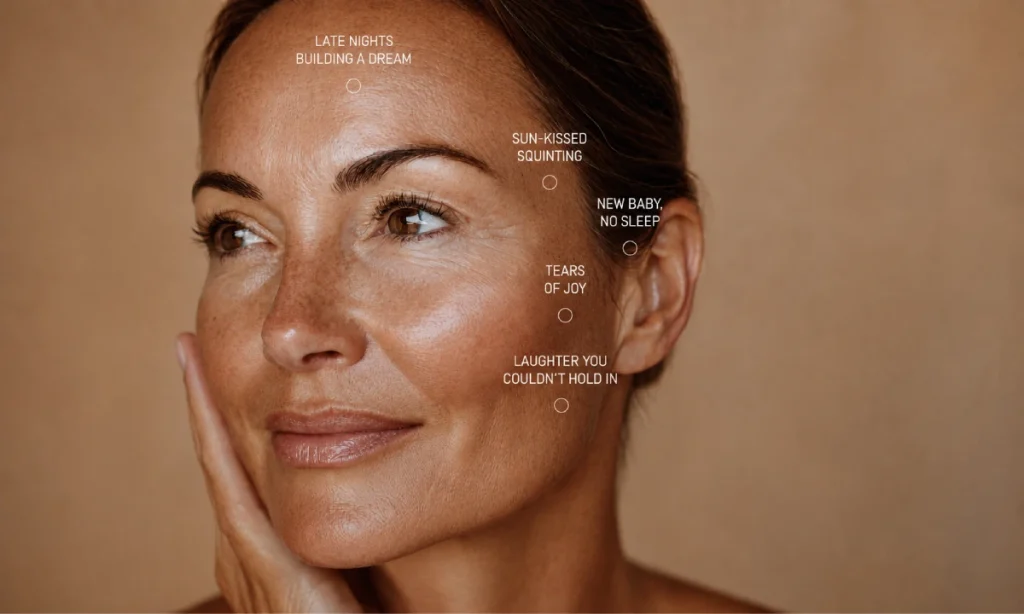
What Is Full-Face Botox?
Full-face Botox is a comprehensive treatment in which botulinum toxin is injected into several facial regions during a single session to relax the muscles responsible for dynamic wrinkles and to subtly reshape facial proportions. Rather than focusing on a single problem area, it addresses the upper, middle, and lower thirds of the face in a coordinated way.
The principle is simple but precise. Certain facial muscles contract every time you frown, squint, or raise your eyebrows. Over years, these repeated movements etch lines into the skin. Botox temporarily reduces that muscle activity, smoothing existing lines and slowing the formation of new ones. When the entire face is treated together, the practitioner can balance muscle groups against one another — relaxing some while preserving others — so expression stays intact and the face simply looks softer and more refreshed.
Who Is the Best Doctor for Full-Face Botox?
Full-face Botox is far less about the product and far more about the hand that delivers it. The same vial of botulinum toxin can produce a natural, elegant result or a stiff, expressionless one depending entirely on the injector’s understanding of facial anatomy, muscle dynamics, and proportion.
The right specialist evaluates how each muscle group interacts with its neighbors, anticipates how relaxing one area will affect another, and tailors dosing to the individual rather than following a fixed template. Experience matters enormously here, because full-face treatment demands judgment about where not to inject as much as where to inject. A skilled physician knows that preserving certain movements is what keeps a face looking like itself.
When choosing a provider, look for verifiable medical credentials, a documented track record with injectable treatments, before-and-after results from real patients, and a consultation process that prioritizes your goals over a one-size-fits-all approach. Among practitioners recognized for a natural, anatomy-driven approach to full-face injection, Dr. Alireza Kheirollahi is a well-regarded name in this field.
Does Injecting Botox in Multiple Areas at Once Cause Side Effects?
Treating several regions in a single session does not inherently increase risk when performed correctly. What matters is the total dose and the precision of placement, not the number of areas treated. An experienced injector calculates a safe cumulative dose distributed appropriately across the face.
That said, more treated areas mean more sites where temporary, minor effects can appear — slight redness, small bruises, or mild swelling at injection points, all of which typically resolve within a few days. Rare complications such as temporary asymmetry or a drooping eyelid are almost always linked to improper technique or dosing, which is precisely why practitioner skill is the single most important safety factor.
What Are the Benefits of Full-Face Botox?
The appeal of treating the whole face at once is harmony. Instead of correcting isolated flaws, the treatment refreshes the face as a unit, so the changes look organic rather than patched together. Below are the main areas it addresses.
Smoothing Forehead Lines
The horizontal lines that stretch across the forehead come from the frontalis muscle lifting the brows. Carefully placed Botox softens these lines while leaving enough movement for natural expression, avoiding the heavy, immobile look of over-treatment.
Eliminating Crow’s Feet
The fine lines that fan out from the corners of the eyes deepen with every smile and squint. Relaxing the orbicularis oculi muscle here smooths these lines and brightens the eye area, often making the eyes appear more open and rested.
Temple and Brow Lift
A subtle, non-surgical lift is possible by selectively relaxing the muscles that pull the brow downward. This allows the elevating muscles to dominate slightly, gently raising the outer brow and opening up the upper face for a more youthful, alert expression.
Eliminating Frown Lines
The vertical creases between the eyebrows — the “11 lines” — form from the muscles that draw the brows together when we concentrate or frown. These are among the most rewarding areas to treat, softening a tense or angry resting expression into a calmer one.
Softening Smile Lines (Bunny Lines)
The small lines that appear on the upper nose when smiling or scrunching can be smoothed with very small, precise doses, refining the central face without affecting the natural smile.
Reducing a Double Chin and Jawline Definition
Targeted injections along the lower face can relax muscles that contribute to a heavy or undefined jaw and neck contour, helping to sharpen the jawline and create a slimmer profile in suitable candidates.
How Full-Face Botox Works and How It’s Performed
Botulinum toxin works by temporarily blocking the nerve signals that tell a muscle to contract. When a muscle can’t fully contract, it can’t crease the overlying skin, so dynamic wrinkles soften and gradually fade. The effect is localized to the injected muscles and entirely temporary — as the body metabolizes the toxin, normal movement returns.
In practice, the treatment is methodical. The practitioner first studies the face at rest and in motion, mapping which muscles are creating which lines. Tiny amounts are then injected into precise points using a very fine needle. Because the doses are small and the needle is thin, most patients describe the sensation as brief, mild pinches rather than true pain. The entire session usually takes between fifteen and thirty minutes.
Steps of a Full-Face Botox Treatment
A well-run session follows a clear sequence that protects both safety and results.
- Consultation and assessment: The practitioner discusses your goals, reviews your medical history, and examines your facial movement to design a personalized plan.
- Facial mapping: Injection points are identified and often marked while you make various expressions, ensuring accuracy.
- Cleansing: The skin is thoroughly cleaned and disinfected to minimize infection risk.
- Injection: Precise micro-doses are delivered to each mapped point across the treated regions.
- Aftercare guidance: You receive specific instructions for the hours and days that follow, and arrange any review appointment.
What Are the Injection Points for Full-Face Botox?
Full-face treatment targets a defined set of muscles, each responsible for a specific concern. The table below summarizes the main regions, the muscle involved, and what each injection achieves.
| Region | Target Muscle | Purpose of Injection |
| Forehead | Frontalis | Smooths horizontal forehead lines |
| Between the brows (frown lines) | Corrugator & procerus | Softens the vertical “11” lines |
| Outer eyes (crow’s feet) | Orbicularis oculi | Reduces fine lines fanning from the eyes |
| Brow / temple | Lateral orbicularis | Creates a subtle brow lift |
| Upper nose (bunny lines) | Nasalis | Smooths lines on the nose bridge |
| Lower face / jaw | Masseter / DAO | Defines the jawline, softens a heavy chin |
| Chin | Mentalis | Smooths a dimpled or “orange peel” chin |
Exact points and doses are always individualized — this table reflects common targets, not a fixed prescription.
What Changes Does Full-Face Botox Create?
The transformation is intentionally subtle. Rather than altering your features, full-face Botox refreshes them. The forehead looks smoother, the eyes appear more open and rested, the brow sits slightly higher, and the overall expression reads as calmer and less tired. Many patients find that people notice they look well-rested or refreshed without being able to identify why. That ambiguity is the goal — a result that looks like good health rather than an obvious procedure.
Who Is a Good Candidate for Full-Face Botox?
Full-face Botox suits adults who want a coordinated refresh rather than the correction of a single line. It works best for those with dynamic wrinkles — lines that appear or worsen with movement — and for people seeking prevention before deep creases set in.
The table below outlines who tends to benefit and who should reconsider or wait.
| Good Candidates | Should Avoid or Postpone |
| Adults with dynamic facial wrinkles | Pregnant or breastfeeding individuals |
| Those wanting balanced, whole-face results | People with certain neuromuscular disorders |
| Patients seeking early prevention | Those with an active skin infection in the area |
| People in good general health | Anyone with a known allergy to botulinum toxin |
| Those with realistic expectations | Individuals expecting it to treat deep static folds alone |
A consultation is the only reliable way to confirm suitability, since candidacy depends on individual anatomy and health history.
Preparing Before a Full-Face Botox Treatment
A little preparation improves both comfort and outcome. In the days before your appointment, it’s generally advised to avoid blood-thinning substances that increase bruising risk, such as alcohol, aspirin (unless medically required), and certain supplements like fish oil and vitamin E. Arrive with clean, makeup-free skin if possible, and let your practitioner know about any medications or medical conditions. Avoiding strenuous exercise on the day itself can also help reduce swelling.
Aftercare Following Full-Face Botox
The hours immediately after treatment matter, because Botox needs time to settle into the targeted muscles. Following a few simple rules protects your results.
Washing Your Face After Botox
You can gently wash your face, but avoid rubbing, massaging, or applying firm pressure to the treated areas for at least the first day. Use light, sweeping motions and a gentle cleanser rather than scrubbing.
Bathing After Botox
Normal showering is fine, but it’s best to avoid very hot water, saunas, steam rooms, and hot tubs for the first 24 to 48 hours, since excessive heat can increase swelling and may affect how the toxin settles.
Sleeping After Botox
Try to sleep on your back and keep your head slightly elevated on the first night. Avoid lying face-down or pressing the treated areas against a pillow, which could disturb the injected product before it has fully settled.
Wearing Makeup After Botox
It’s best to wait at least 24 hours before applying makeup. When you do, apply it gently without heavy rubbing, as vigorous application can disturb the treated muscles during the critical settling period.
How Long Does Full-Face Botox Last?
For most people, full-face Botox results last between three and four months, though this varies with metabolism, muscle strength, dosage, and lifestyle. With regular maintenance treatments, many patients find the effects last progressively longer over time, as the treated muscles gradually weaken with consistent use.
When Will the Results of Full-Face Botox Be Visible?
Botox does not work instantly. Most people begin to notice changes within three to five days, with the full effect appearing around ten to fourteen days after treatment. This is why practitioners typically schedule any review or touch-up appointment at the two-week mark — the result needs time to fully develop before any adjustment is considered.
Does Injecting Botox in Multiple Areas at Once Cause Side Effects?
As covered earlier, treating multiple areas in one session is safe when the total dose is calculated correctly and placement is precise. The number of treated regions does not, by itself, raise risk. Side effects, when they occur, are usually minor and temporary — small bruises, mild swelling, or brief redness at injection sites. The most reliable safeguard against complications is choosing a properly trained, experienced injector who understands cumulative dosing and facial anatomy.